 ChipApex | Global Electronic Components Supplier
SEARCH
Search Product
Search Post
— IC芯片 | 连接器 | 传感器 | 被动器件 —
Search productSearch post
— IC芯片 | 连接器 | 传感器 | 被动器件 —
Consult the customer manager about the wholesale price.
consultation hotline:86-132-6715-2157
email:[email protected]
Contact the product manager for consultation. One-stop consultation is available.
Do you want a lower wholesale price? Please send us your inquiry and we will reply immediately.
The Texas Instruments TAS5162DDVR is a high-performance stereo digital amplifier power stage designed for high-efficiency audio amplification. It delivers up to 2x210 W into 6-ohm BTL loads and 1x300 W into 4-ohm PBTL loads at 10% THD+N. The device operates with a 50 V PVDD supply and 12 V GVDD/VDD supplies, achieving over 90% efficiency via 80-mΩ output MOSFETs. It features an SNR exceeding 110 dB (A-weighted) when paired with the TAS5518 modulator. The DDV package provides a 44-pin HTSSOP form factor with a thermal PowerPad for heatsink coupling.
Verify the specific ordering suffix matches the required package type, as the TAS5162 is available in both DKD and DDV variants. Confirm that the design utilizes the recommended TI chipset, such as the TAS5508 or TAS5518 modulator, to achieve the specified audio performance metrics. Ensure the system design adheres to the recommended PCB layout for thermal management, particularly regarding the PowerPad connection to the heatsink.
Select this component for applications requiring high-power stereo output with strict EMI compliance requirements. The device supports multiple configuration modes selectable via hardwired pins, offering flexibility for BTL, PBTL, or single-ended setups. Designers must account for the dual power supply requirement (50 V and 12 V) and ensure adequate decoupling near the PVDD and GVDD pins to maintain stability.
The TAS5162 belongs to Texas Instruments' PurePath Digital family of Class-D amplifier power stages. It is engineered to work in conjunction with external PWM processors to create complete high-fidelity audio solutions. The DDVR suffix indicates the 44-pin HTSSOP PowerPad package variant, which offers a smaller footprint compared to the 36-pin PSOP3 option but requires careful attention to thermal interface resistance for optimal heat dissipation.
Direct pin-compatible substitutes are not explicitly confirmed in the provided documentation. Evaluate alternative TI power stages based on required output power, package thermal characteristics, and compatibility with existing PWM modulators.
No, the device does not require power-supply sequencing due to its internal power-on reset circuitry.
The overcurrent limit is programmable via an external resistor connected to the OC_ADJ pin, allowing for optimization with different output filter inductors.
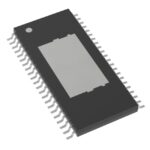 TAS5162DDVR
The activity of extra discounts on wholesale prices is in full swing…
Please fill in your contact information and we will send you the latest wholesale price list.






