 ChipApex | Global Electronic Components Supplier
SEARCH
Search Product
Search Post
— IC芯片 | 连接器 | 传感器 | 被动器件 —
Search productSearch post
— IC芯片 | 连接器 | 传感器 | 被动器件 —
Consult the customer manager about the wholesale price.
consultation hotline:86-132-6715-2157
email:[email protected]
Contact the product manager for consultation. One-stop consultation is available.
Do you want a lower wholesale price? Please send us your inquiry and we will reply immediately.
The TB62747AFG,EL is a 16-channel constant current LED driver IC manufactured by Toshiba Semiconductor and Storage. It operates on a single supply voltage ranging from 3 V to 5.5 V and delivers an output current of up to 45 mA per channel. The device utilizes a boost topology with a maximum output voltage of 26 V and supports a switching frequency of 25 MHz. Designed for surface mount installation in a 24-pin SSOP package, it functions within a temperature range of -40°C to +85°C. The integrated circuit features high ESD protection ratings of +4000V (Human Body Model) and +500V (Machine Model), ensuring robust performance in LED lighting applications.
Verify the specific suffix C8 against the manufacturer's official documentation to confirm exact packaging and handling specifications. Ensure that the 24-pin SSOP footprint matches the target PCB layout requirements. Confirm RoHS compliance status directly with the supplier or datasheet before finalizing procurement decisions for production runs.
Select this component when designing circuits requiring multiple synchronized LED channels with precise current matching. The boost topology is suitable for driving LEDs with forward voltages exceeding the supply rail. Consider the thermal dissipation capabilities of the SSOP package for high-density layouts. Verify that the required operating temperature range aligns with the -40°C to +85°C specification.
This part belongs to the TB62747 family of integrated constant current LED drivers. These devices are engineered to simplify the control of complex LED matrices by integrating shift register functionality and current regulation. The family focuses on reducing external component requirements while maintaining high reliability and brightness uniformity for professional display and lighting solutions.
Public confirmed substitute part numbers are not available in the provided documentation. Consult Toshiba Semiconductor and Storage technical support for direct replacements or pin-compatible alternatives if sourcing constraints exist.
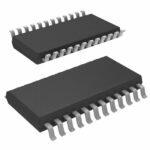 TB62747AFG,EL
The activity of extra discounts on wholesale prices is in full swing…
Please fill in your contact information and we will send you the latest wholesale price list.





