 ChipApex | Global Electronic Components Supplier
SEARCH
Search Product
Search Post
— IC芯片 | 连接器 | 传感器 | 被动器件 —
Search productSearch post
— IC芯片 | 连接器 | 传感器 | 被动器件 —
Consult the customer manager about the wholesale price.
consultation hotline:86-132-6715-2157
email:[email protected]
Contact the product manager for consultation. One-stop consultation is available.
Do you want a lower wholesale price? Please send us your inquiry and we will reply immediately.
The TC74LCX574FTELM is an octal D-type flip-flop manufactured by Toshiba Semiconductor and Storage, belonging to the 74LCX series. It features a single element with eight bits per element, utilizing positive-edge triggering for data capture. The device operates within a supply voltage range of 1.65V to 3.6V and supports a maximum clock frequency of 150 MHz. It provides tri-state, non-inverting outputs with drive currents of 24mA for both high and low states. Key electrical parameters include a maximum propagation delay of 8.5ns at 3.3V with a 50pF load, a static current of 10 µA, and an input capacitance of 7 pF. The component is housed in a 20-TSSOP package.
This component is officially classified as obsolete and no longer manufactured by Toshiba Semiconductor and Storage. Procurement must rely on existing stock from authorized distributors or secondary market suppliers. Verify part authenticity carefully due to potential availability of surplus or refurbished units. Ensure that any substitute components meet the required electrical specifications and pin compatibility before integration into new designs.
Engineers should consider this part only for maintenance or legacy system upgrades rather than new product development. Evaluate alternative active components from the same manufacturer or competitors if long-term supply stability is required. Check for direct replacements that offer identical pinouts and electrical characteristics to minimize redesign efforts. Confirm that the selected substitute supports the necessary voltage ranges and speed requirements.
The TC74LCX574FTELM belongs to the 74LCX family of low-voltage CMOS logic devices. This series is designed for high-speed operation while maintaining low power consumption, making it suitable for portable and battery-powered applications. The specific model integrates eight D-type flip-flops with tri-state outputs, providing a compact solution for managing multiple data lines in space-constrained PCB layouts.
The device uses positive-edge triggering to capture data on the rising edge of the clock signal.
It features non-inverting outputs, meaning the output state follows the input state when enabled.
The maximum operating supply voltage is 3.6V, with a minimum of 1.65V.
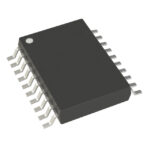 TC74LCX574FTELM
The activity of extra discounts on wholesale prices is in full swing…
Please fill in your contact information and we will send you the latest wholesale price list.





