 ChipApex | Global Electronic Components Supplier
SEARCH
Search Product
Search Post
— IC芯片 | 连接器 | 传感器 | 被动器件 —
Search productSearch post
— IC芯片 | 连接器 | 传感器 | 被动器件 —
Consult the customer manager about the wholesale price.
consultation hotline:86-132-6715-2157
email:[email protected]
Contact the product manager for consultation. One-stop consultation is available.
Do you want a lower wholesale price? Please send us your inquiry and we will reply immediately.
The TC9401CPD is a Voltage-to-Frequency and Frequency-to-Voltage converter manufactured by Microchip Technology. It utilizes low-power CMOS technology to accept variable analog input signals and generate linearly proportional output pulse trains or voltages. The device supports single or dual supply operation ranging from +8V to +15V or ±4V to ±7.5V. It features a full-scale frequency range of DC to 100 kHz for F/V mode and 1 Hz to 100 kHz for V/F mode, with typical linearity errors of 0.01% in V/F mode and 0.02% in F/V mode.
Verify that the specific suffix 'CPD' corresponds to the commercial temperature range (0°C to +70°C) and the 14-pin Plastic DIP package as documented in the official datasheet. Confirm that the ordering information matches the manufacturer's current production status and packaging specifications before finalizing procurement decisions.
Select the TC9401CPD when application requirements demand superior linearity compared to standard variants, specifically requiring 0.01% V/F and 0.02% F/V accuracy. Ensure the design environment operates within the commercial temperature limits and utilizes the PDIP-14 through-hole package format compatible with the selected PCB layout constraints.
This component belongs to the TC9400/9401/9402 family of charge-balancing converters. While sharing identical pinouts and core architecture, the TC9401 variant is distinguished by its tighter linearity specifications. It serves as a high-accuracy alternative to the TC9400 and TC9402 models within the same product series.
The TC9400CPD and TC9402CPD are direct pin-compatible substitutes within the same package. Note that these alternatives offer different linearity specifications (0.05% and 0.25%, respectively). Verify if the reduced accuracy meets the system requirements before substitution.
The device utilizes a charge balancing technique where the input current is balanced against fixed charges from a reference voltage, ensuring the output frequency remains linearly proportional to the input voltage.
In V/F mode, it triggers a pulse when the op amp output crosses a threshold. In F/V mode, it accepts the input frequency waveform to initiate the charge dispensing process.
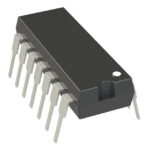 TC9401CPD
The activity of extra discounts on wholesale prices is in full swing…
Please fill in your contact information and we will send you the latest wholesale price list.





