 ChipApex | Global Electronic Components Supplier
SEARCH
Search Product
Search Post
— IC芯片 | 连接器 | 传感器 | 被动器件 —
Search productSearch post
— IC芯片 | 连接器 | 传感器 | 被动器件 —
Consult the customer manager about the wholesale price.
consultation hotline:86-132-6715-2157
email:[email protected]
Contact the product manager for consultation. One-stop consultation is available.
Do you want a lower wholesale price? Please send us your inquiry and we will reply immediately.
The TDA1308TT/N2,118 is a Class-AB stereo headphone driver fabricated in a 1 μm CMOS process. It operates on a single supply of 3.0 V to 7.0 V or dual supplies of ±1.5 V to ±3.5 V. The device delivers up to 80 mW output power per channel into a 32 Ω load with THD+N below 0.1%. Key electrical parameters include a typical signal-to-noise ratio of 110 dB and a slew rate of 5 V/μs. It functions within an ambient temperature range of -40 °C to +85 °C.
Verify the specific ordering suffix TT/N2,118 against the manufacturer's current product status, as availability may vary. Confirm that the TSSOP8 package variant matches the intended PCB footprint requirements. Ensure compliance with RoHS directives if required by the target application environment. Cross-reference the datasheet revision date to confirm the validity of the provided electrical characteristics.
Select this component for designs requiring low-voltage stereo amplification with minimal external components. The integrated protection features simplify circuit design by removing the need for additional short-circuit safeguards. Consider the thermal resistance characteristics when determining heat dissipation needs for dense layouts. Verify input offset voltage specifications against the system's noise floor requirements.
This device belongs to the TDA1308 family of audio amplifiers designed specifically for portable consumer electronics. It utilizes a complementary metal oxide semiconductor manufacturing process to achieve low power consumption. The family includes variants such as the standard SO8 package version, offering flexibility in board space constraints while maintaining consistent audio performance metrics.
The TDA1308T serves as a direct pin-compatible alternative utilizing the SO8 package instead of TSSOP8. Designers must verify package dimensions and thermal properties when substituting between these form factors. Other members of the TDA1308 series may offer similar electrical characteristics but require careful evaluation of pin configurations.
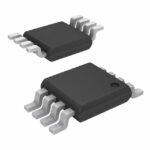 TDA1308TT/N2,118
The activity of extra discounts on wholesale prices is in full swing…
Please fill in your contact information and we will send you the latest wholesale price list.






