 ChipApex | Global Electronic Components Supplier
SEARCH
Search Product
Search Post
— IC芯片 | 连接器 | 传感器 | 被动器件 —
Search productSearch post
— IC芯片 | 连接器 | 传感器 | 被动器件 —
Consult the customer manager about the wholesale price.
consultation hotline:86-132-6715-2157
email:[email protected]
Contact the product manager for consultation. One-stop consultation is available.
Do you want a lower wholesale price? Please send us your inquiry and we will reply immediately.
The TDA1519C is an integrated Class-B dual output audio power amplifier manufactured by NXP Semiconductors. It delivers 22 W in Bridge-Tied Load (BTL) configuration or 2 × 11 W in stereo mode at 4 Ω with 10% THD. The device operates on a supply voltage ranging from 6 V to 17.5 V and features a fixed closed-loop voltage gain of 40 dB. Key electrical characteristics include a total quiescent current of 80 mA maximum, standby current under 100 µA, and a DC output offset voltage limited to 250 mV. It incorporates comprehensive protection mechanisms including load dump tolerance up to 45 V, reverse polarity safety, and thermal shutdown.
Verify the specific package variant required, as the TDA1519 family includes SIL9P, SMS9P, HSOP20 (SOT397-1), and HSOP20 Low Stand-off Height (SOT418-3). Confirm that the ordering suffix matches the desired physical footprint and mounting style. Check the official NXP product status page, as this component may be marked obsolete or discontinued depending on the manufacturing date and region.
Select the TDA1519C when a fixed 40 dB gain is acceptable for the application, eliminating the need for external feedback resistors to set gain. Choose the BTL configuration for higher single-channel power output into 4 Ω loads. Ensure the PCB layout accommodates the specific heatsink requirements of the chosen package version, particularly for the HSOP20 variants where the heatsink must be soldered to copper areas.
The TDA1519C belongs to the TDA151 series of audio power amplifiers produced by NXP Semiconductors (formerly Philips Semiconductors). It is designed as a cost-effective solution for high-output audio applications. The device is pin-compatible with the TDA1519B and TDA1519CSP variants, allowing for potential design flexibility within the same package constraints while maintaining identical input configurations.
The TDA1519C is pin-compatible with the TDA1519B and TDA1519CSP. Verify if the alternative part number meets the specific thermal and electrical requirements of the design before substitution.
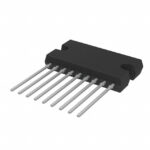 TDA1519C/N3,112
The activity of extra discounts on wholesale prices is in full swing…
Please fill in your contact information and we will send you the latest wholesale price list.






