 ChipApex | Global Electronic Components Supplier
SEARCH
Search Product
Search Post
— IC芯片 | 连接器 | 传感器 | 被动器件 —
Search productSearch post
— IC芯片 | 连接器 | 传感器 | 被动器件 —
Consult the customer manager about the wholesale price.
consultation hotline:86-132-6715-2157
email:[email protected]
Contact the product manager for consultation. One-stop consultation is available.
Do you want a lower wholesale price? Please send us your inquiry and we will reply immediately.
The TDA1552Q/N4,112 is a Philips Semiconductors integrated class-B output amplifier designed for stereo car radio applications. It features two amplifiers in a Bridge Tied Load (BTL) configuration within a 13-lead single-in-line plastic power package. The device delivers 22 W of output power per channel into a 4 Ω load with 10% THD at a 14.4 V supply. Key electrical parameters include a fixed closed-loop voltage gain of 26 dB, an input impedance of approximately 60 kΩ, and a total quiescent current of 80 mA typical. It operates within a supply voltage range of 6.0 V to 18.0 V.
Verify component authenticity through official NXP or authorized distributor channels. Confirm the specific ordering suffix matches the required package variant. Check material declarations and environmental compliance status against current regulatory standards. Ensure storage conditions adhere to specified limits to maintain reliability before installation.
Select this component for automotive audio designs necessitating high power output in a compact form factor. Evaluate the 13-lead SIL package constraints regarding PCB layout and thermal dissipation requirements. Consider the fixed gain characteristic when designing preceding signal processing stages. Verify that the application environment remains within the specified operating temperature and voltage ranges.
This part belongs to the TDA1552 series of power amplifiers developed primarily for the automotive industry. It represents a solution for integrating stereo amplification directly into car radio units without requiring complex external driver circuits. The design focuses on robustness against automotive electrical noise and transient events.
Consult official documentation for direct replacements. Cross-reference pinouts and electrical characteristics carefully if considering alternative manufacturers.
The device is load dump protected up to 45 V for a duration of 50 ms with a rise time greater than or equal to 2.5 ms.
In the stand-by condition, the device draws a very low current, typically less than 100 μA, minimizing battery drain when the system is inactive.
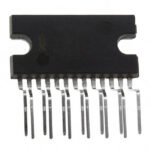 TDA1552Q/N4,112
The activity of extra discounts on wholesale prices is in full swing…
Please fill in your contact information and we will send you the latest wholesale price list.







