 ChipApex | Global Electronic Components Supplier
SEARCH
Search Product
Search Post
— IC芯片 | 连接器 | 传感器 | 被动器件 —
Search productSearch post
— IC芯片 | 连接器 | 传感器 | 被动器件 —
Consult the customer manager about the wholesale price.
consultation hotline:86-132-6715-2157
email:[email protected]
Contact the product manager for consultation. One-stop consultation is available.
Do you want a lower wholesale price? Please send us your inquiry and we will reply immediately.
The TDA7569LVPD is a Class-SB quad bridge audio amplifier manufactured by STMicroelectronics, designed for automotive applications. It operates within a supply voltage range of 6 V to 18 V and delivers output power of 50 W or 75 W depending on load conditions. The device features four channels with selectable gains of 16 dB or 26 dB. It supports load impedances of 2 Ohms and 4 Ohms, achieving a THD plus noise level of 0.3%. Key electrical parameters include a maximum output current of 8 A, an operating supply current of 170 mA, and an input offset voltage (Vos) of 80 mV. The component is housed in a PowerSO-36 package and is qualified under AEC-Q100 standards.
Verify the specific suffix 'LVPD' against official STMicroelectronics documentation to confirm pinout and packaging details. Confirm the lifecycle status, as related variants may be marked as Not Recommended for New Designs (NRND). Ensure compatibility with the target PCB footprint for the PowerSO-36 package and validate thermal management requirements for the intended power output levels.
Select this component for designs requiring high efficiency and integrated digital diagnostics in automotive environments. The differential input stage offers improved disturbance rejection. Consider the available gain settings (16 dB or 26 dB) to match source impedance requirements. Verify that the system can support the minimum 6 V start-stop profile operation if required by the application specifications.
This part belongs to the TDA7569 family of advanced BCD technology quad bridge car radio amplifiers. It shares functional similarities with variants such as the TDA7569BDLVPD and TDA7569BLV, which also feature I2C diagnostics and high efficiency. The family is designed to meet OEM specifications for low voltage operation and environmental protection through reduced emissions.
Public confirmed substitute part numbers are not provided in the available data. Related family members include TDA7569BDLVPD and TDA7569BLV. Verify pin-to-pin compatibility and parameter alignment before substitution.
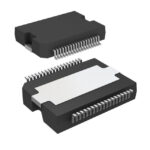 TDA7569LVPD
The activity of extra discounts on wholesale prices is in full swing…
Please fill in your contact information and we will send you the latest wholesale price list.





