 ChipApex | Global Electronic Components Supplier
SEARCH
Search Product
Search Post
— IC芯片 | 连接器 | 传感器 | 被动器件 —
Search productSearch post
— IC芯片 | 连接器 | 传感器 | 被动器件 —
Consult the customer manager about the wholesale price.
consultation hotline:86-132-6715-2157
email:[email protected]
Contact the product manager for consultation. One-stop consultation is available.
Do you want a lower wholesale price? Please send us your inquiry and we will reply immediately.
The TDA8589BJ/N3,112 is an I2C-bus controlled quad audio power amplifier and multiple voltage regulator. It features four amplifiers configured in Bridge Tied Load (BTL) to drive front and rear speakers. The device includes five voltage regulators, two power switches, and comprehensive diagnostic capabilities via the I2C interface. Key specifications include a maximum output power of 46 W at 14.4 V with a 4 Ω load, and 69 W at 15.2 V with a 2 Ω load. Operating supply voltages range from 8 V to 18 V, with protection against short circuits, thermal overload, and load dumps.
Verify the specific suffix N3,112 corresponds to the required RoHS compliance and packaging format. Confirm that the BJ variant matches the system's voltage regulator requirements, specifically the fixed 3.3 V outputs for Regulator 2 and Regulator 3. Ensure the DBS37P package footprint aligns with the printed circuit board design before finalizing procurement.
Select this component when a single IC solution is needed for both high-power audio amplification and system voltage regulation. The TDA8589BJ is suitable for applications requiring fixed 3.3 V supplies for microcontrollers and digital signal processors. Consider the BTL configuration and I2C diagnostic features if system monitoring and simplified wiring are priorities over discrete component designs.
This part belongs to the TDA8589xJ family of automotive audio power amplifiers. It is manufactured by Philips Semiconductors, now NXP Semiconductors. The device integrates complementary quad audio power amplifiers using BCDMOS technology with a dedicated voltage regulator section. It is designed specifically for automotive environments, offering robust protection against vehicle-specific electrical disturbances.
TDA8589J
The backup capacitor stores energy to maintain the Regulator 2 output voltage during brief periods when the main battery supply voltage is absent, allowing the microcontroller time to prepare for a loss-of-voltage event.
If the average junction temperature rises to a set value, the DIAG pin goes LOW to indicate a pre-warning. If the temperature continues to rise, the device activates soft thermal clipping to reduce output power or shuts down all channels to prevent damage.
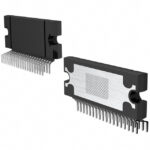 TDA8589BJ/N3,112
The activity of extra discounts on wholesale prices is in full swing…
Please fill in your contact information and we will send you the latest wholesale price list.






