 ChipApex | Global Electronic Components Supplier
SEARCH
Search Product
Search Post
— IC芯片 | 连接器 | 传感器 | 被动器件 —
Search productSearch post
— IC芯片 | 连接器 | 传感器 | 被动器件 —
Consult the customer manager about the wholesale price.
consultation hotline:86-132-6715-2157
email:[email protected]
Contact the product manager for consultation. One-stop consultation is available.
Do you want a lower wholesale price? Please send us your inquiry and we will reply immediately.
The TDF8530TH/N2,112 is a quad Bridge-Tied Load (BTL) Class-D car audio amplifier from NXP Semiconductors. It features an NDMOST-NDMOST output stage based on SOI BCDMOS technology for high efficiency and low power dissipation. The device operates in I2C-bus or non-I2C modes, supporting up to 12 addresses. It delivers 45 W into 2 Ω at 14.4 V and 100 W at 24 V. Key features include full diagnostics, clip detection, and advanced protection against thermal, overcurrent, and load dump conditions.
Verify the specific ordering suffix and package variant against the official manufacturer datasheet to ensure compatibility with design requirements. Confirm that the component meets all relevant automotive qualification standards before integration into final products.
Select this amplifier for applications requiring high power output with minimal heat sink size due to its efficient Class-D operation. Ensure the design supports the required I2C bus interface if diagnostic features are needed. Verify supply voltage ranges and protection thresholds match the target vehicle electrical system specifications.
This component belongs to the TDF8530 series of automotive audio amplifiers. It is designed for scalable infotainment solutions within connected radio architectures. The device complements other NXP automotive components such as tuners and microprocessors for complete system integration.
Consult official documentation for confirmed substitute part numbers. Direct replacements must maintain identical pinout, electrical characteristics, and functional compatibility to ensure seamless integration without redesign.
The operating mode is determined by the state of the ADS pin. Shorting ADS to ground selects non-I2C-bus mode, while connecting external resistors to ADS and MOD allows selection of one of 12 I2C-bus addresses.
The TDF8530 includes independent short-circuit protection for each channel, advanced protection for load, ground, and supply shorts, and Window Protection (WP) to prevent startup during supply line shorts.
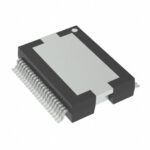 TDF8530TH/N2,112
The activity of extra discounts on wholesale prices is in full swing…
Please fill in your contact information and we will send you the latest wholesale price list.






