 ChipApex | Global Electronic Components Supplier
SEARCH
Search Product
Search Post
— IC芯片 | 连接器 | 传感器 | 被动器件 —
Search productSearch post
— IC芯片 | 连接器 | 传感器 | 被动器件 —
Consult the customer manager about the wholesale price.
consultation hotline:86-132-6715-2157
email:[email protected]
Contact the product manager for consultation. One-stop consultation is available.
Do you want a lower wholesale price? Please send us your inquiry and we will reply immediately.
The TDF8534HH/N2/S710Y is a five-channel Class-D audio amplifier from the NXP TDF853x family, designed for automotive applications. It operates within a supply voltage range of 5.5 V to 25 V and delivers up to 80 W per channel into 2 Ω or 4 Ω loads. The device features a single digital-feedback loop with feedback after the low-pass filter to enhance audio quality and reduce bill of materials cost. It supports TDM/I²S digital inputs and includes comprehensive protection mechanisms such as load dump protection up to 50 V, thermal fold-back, and independent output current monitoring.
Verify the specific ordering suffix S710Y against official manufacturer documentation to confirm package type and tape-and-reel specifications. Ensure compatibility with existing board layouts regarding the HLQFP100 package dimensions and thermal requirements. Confirm that the 5.5 V to 25 V operating range aligns with the target vehicle's power supply characteristics.
Select this component when five high-power channels are required in an automotive environment. Compare against the TDF8536HH if higher voltage (45 V) or higher power (140 W) per channel is needed. Consider the TDF8532HH for four-channel configurations. Evaluate the interleaved power stage option if improved EMC performance is critical for the specific application.
This part belongs to the NXP TDF853x series of ultra-efficient Class-D amplifiers. The series includes variants with three, four, or five channels, supporting various supply voltages up to 45 V. These amplifiers are engineered to provide seamless audio experiences in vehicles, particularly those supporting 5.5 V stop-start systems.
Official substitutes within the same family include the TDF8534BHH for 18 V operation or the TDF8536HH for 45 V high-power applications. Verify pinout and thermal characteristics before substitution. No direct cross-family replacements are officially confirmed in the provided datasheet.
The TDF8534HH supports a supply voltage range from 5.5 V to 25 V.
Yes, two BTL channels can be combined to drive a 1 Ω load using the parallel mode feature.
It includes startup diagnostics for AC/DC coupled loads, supply voltage feedback with 8-bit resolution, selectable clip detection, DC output offset diagnostics, and IEEE 1194.1-compliant board-level boundary scan.
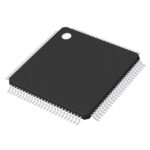 TDF8534HH/N2/S710Y
The activity of extra discounts on wholesale prices is in full swing…
Please fill in your contact information and we will send you the latest wholesale price list.






