 ChipApex | Global Electronic Components Supplier
SEARCH
Search Product
Search Post
— IC芯片 | 连接器 | 传感器 | 被动器件 —
Search productSearch post
— IC芯片 | 连接器 | 传感器 | 被动器件 —
Consult the customer manager about the wholesale price.
consultation hotline:86-132-6715-2157
email:[email protected]
Contact the product manager for consultation. One-stop consultation is available.
Do you want a lower wholesale price? Please send us your inquiry and we will reply immediately.
The TDF8541J/N3,112 is an I2C-bus controlled quad Bridge-Tied Load audio power amplifier designed for automotive applications. It operates within a supply voltage range of 6 V to 18 V and delivers up to 45 W into 4 Ω loads at 15.2 V. The device utilizes complementary DMOS output stages in an SOI-based BCD process for robust performance. It features full diagnostics, including start-up load detection, thermal pre-warning, and clip detection. The amplifier supports legacy and I2C modes with four programmable addresses.
Verify the specific ordering suffix and package variant when sourcing components. Confirm that the requested part matches the exact pin configuration and marking requirements for your design. Ensure compatibility with existing I2C address configurations if multiple units are deployed in a single system.
Select this amplifier for applications requiring high power output with integrated diagnostic capabilities. Consider the SOI technology benefits for noise immunity and reliability in harsh automotive environments. Evaluate the I2C control requirements against your system's microcontroller interface capabilities.
The TDF8541 series represents NXP Semiconductors' solution for advanced automotive audio power amplification. It integrates digital control features typically found in higher-level processors directly into the power stage. This integration simplifies system architecture by reducing external component count and enabling sophisticated audio management strategies.
Consult official NXP documentation for confirmed substitute part numbers. Verify pin-to-pin compatibility and electrical specifications before substitution. Ensure any replacement maintains the required I2C protocol support and diagnostic functionality.
The amplifier uses a capacitor on the SVR pin to create a reference voltage that follows the supply voltage slowly. This prevents common mode ripple and ensures the DC input bias remains stable even when the battery voltage drops to 6 V during cranking.
The I2C-bus provides access to status bits for Power-On Reset, low battery, clip detection, thermal pre-warning, short circuits, speaker faults, and offset detection. Pin DIAG can also be configured to indicate these faults physically.
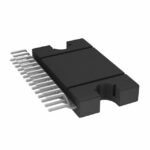 TDF8541J/N3,112
The activity of extra discounts on wholesale prices is in full swing…
Please fill in your contact information and we will send you the latest wholesale price list.





