 ChipApex | Global Electronic Components Supplier
SEARCH
Search Product
Search Post
— IC芯片 | 连接器 | 传感器 | 被动器件 —
Search productSearch post
— IC芯片 | 连接器 | 传感器 | 被动器件 —
Consult the customer manager about the wholesale price.
consultation hotline:86-132-6715-2157
email:[email protected]
Contact the product manager for consultation. One-stop consultation is available.
Do you want a lower wholesale price? Please send us your inquiry and we will reply immediately.
The TFA9812HN/N1,557 is a high-efficiency Bridge Tied Load (BTL) stereo Class-D audio amplifier with a digital I2S input. It operates on an 8 V to 20 V external power supply and features a continuous time output power of 2 × 12 W at RL = 8 Ω and VDDP = 15 V without an external heat sink. The device supports sample rates from 8 kHz to 192 kHz and includes a digital parametric 10-band equalizer. It utilizes an internal Phase-Locked Loop (PLL) and offers both I2C control mode and Legacy hardware pin control.
Verify the specific ordering suffix against the manufacturer's current documentation to ensure compatibility with required packaging or environmental standards. Confirm that the component status aligns with design lifecycle requirements, as availability may vary based on production schedules. Cross-reference the datasheet revision to validate all electrical parameters before finalizing procurement specifications.
Select this amplifier for applications requiring high efficiency and low power dissipation in stereo configurations. Ensure the system design accommodates the 8 V to 20 V supply range and the HVQFN48 package dimensions. Consider the integrated DSP features if speaker compensation or precise volume control is needed without additional external components.
This component belongs to NXP Semiconductors' TFA98xx series of digital audio amplifiers. It is designed for consumer electronics where space constraints and thermal management are critical. The HVQFN48 package provides a compact solution for integrating advanced audio processing capabilities directly into the mainboard.
Consult official NXP documentation for verified substitute part numbers. Do not assume cross-compatibility with other Class-D amplifiers without verifying pinout, voltage ratings, and control interface specifications.
No, the device supports a continuous time output power of 2 × 12 W without an external heat sink due to its efficient thermal design and exposed die paddle technology.
The TFA9812 supports two control modes: I2C control mode for full feature access via software, and Legacy mode which uses hardware pin connections for key features without I2C involvement.
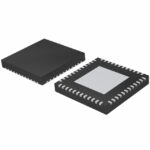 TFA9812HN/N1,557
The activity of extra discounts on wholesale prices is in full swing…
Please fill in your contact information and we will send you the latest wholesale price list.






