 ChipApex | Global Electronic Components Supplier
SEARCH
Search Product
Search Post
— IC芯片 | 连接器 | 传感器 | 被动器件 —
Search productSearch post
— IC芯片 | 连接器 | 传感器 | 被动器件 —
Consult the customer manager about the wholesale price.
consultation hotline:86-132-6715-2157
email:[email protected]
Contact the product manager for consultation. One-stop consultation is available.
Do you want a lower wholesale price? Please send us your inquiry and we will reply immediately.
The TIL117 is a single-channel optically coupled isolator manufactured by Isocom Components 2004 LTD. It integrates an infrared light-emitting diode with an NPN silicon phototransistor featuring a base output. The device is housed in a standard 6-pin DIP package and supports surface-mount or through-hole installation depending on the specific suffix. Key electrical parameters include a maximum forward voltage of 1.65V, a maximum input current of 60 mA, and an isolation voltage of 5.3 kVrms (7.5 kV peak). Typical switching characteristics feature a rise time of 2µs and a fall time of 11µs. The current transfer ratio ranges from a minimum of 40% to a maximum of 80%.
Verify the specific ordering suffix to confirm package type and lead frame material. Ensure the selected variant matches the required isolation voltage rating and pin configuration for the target PCB layout. Cross-reference the manufacturer's latest datasheet to confirm compliance with regional safety standards before finalizing procurement orders.
Select this component when a phototransistor output with a base terminal is required for improved linearity or speed. Compare the current transfer ratio requirements against the application's load conditions. Ensure the operating temperature range aligns with the system environment. Verify that the 6-pin DIP form factor fits the available board space constraints.
The TIL117 belongs to the TIL11x series of optocouplers from Isocom Components 2004 LTD. This family includes variants like the TIL111, TIL114, and TIL116, which share similar structural designs but differ in performance specifications such as current transfer ratio and switching speeds. The series is designed for general-purpose isolation tasks.
Direct substitutes within the same family include the TIL111, TIL114, and TIL116. These parts share the same 6-pin DIP package and basic functional architecture. Verify that the alternative part's current transfer ratio and switching times meet the specific circuit requirements before substitution.
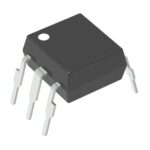 TIL117
The activity of extra discounts on wholesale prices is in full swing…
Please fill in your contact information and we will send you the latest wholesale price list.






