 ChipApex | Global Electronic Components Supplier
SEARCH
Search Product
Search Post
— IC芯片 | 连接器 | 传感器 | 被动器件 —
Search productSearch post
— IC芯片 | 连接器 | 传感器 | 被动器件 —
Consult the customer manager about the wholesale price.
consultation hotline:86-132-6715-2157
email:[email protected]
Contact the product manager for consultation. One-stop consultation is available.
Do you want a lower wholesale price? Please send us your inquiry and we will reply immediately.
The TIL189-1 is a photovoltaic output optocoupler manufactured by Texas Instruments. It consists of an aluminum gallium arsenide (AlGaAs) infrared LED coupled to a photovoltaic detector. The device provides electrical isolation between input and output circuits without requiring external bias voltage on the output side, relying instead on generated photocurrent. This configuration supports high-voltage isolation capabilities suitable for sensitive signal transmission applications where galvanic separation is required.
Verify RoHS compliance status as historical documentation indicates non-compliance. Confirm package type availability matches design requirements. Check manufacturer lifecycle status to ensure long-term supply stability. Validate datasheet revision against current production specifications before finalizing component selection for new designs.
Select this component when zero-bias output operation is necessary. Consider the trade-off between output drive capability and isolation complexity. Ensure input current limits are respected to maintain LED longevity. Verify that the generated photocurrent meets the downstream load requirements without additional amplification stages.
The TIL189-1 belongs to Texas Instruments' legacy optocoupler portfolio. It represents a standard solution for basic galvanic isolation tasks. The device predates modern high-speed digital isolators but remains relevant for simple analog or low-frequency digital switching applications requiring robust electrical separation.
Direct pin-compatible replacements may be limited due to age. Evaluate newer photovoltaic optocouplers from other manufacturers if supply constraints exist. Ensure replacement parts match isolation voltage ratings and input-output capacitance specifications.
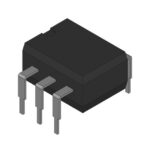 TIL189-1
The activity of extra discounts on wholesale prices is in full swing…
Please fill in your contact information and we will send you the latest wholesale price list.






