 ChipApex | Global Electronic Components Supplier
SEARCH
Search Product
Search Post
— IC芯片 | 连接器 | 传感器 | 被动器件 —
Search productSearch post
— IC芯片 | 连接器 | 传感器 | 被动器件 —
Consult the customer manager about the wholesale price.
consultation hotline:86-132-6715-2157
email:[email protected]
Contact the product manager for consultation. One-stop consultation is available.
Do you want a lower wholesale price? Please send us your inquiry and we will reply immediately.
The TIL192BSMT&R is a dual-channel surface mount optocoupler manufactured by Isocom Components 2004 LTD. It features an 8-pin Surface Mount DIP package and utilizes transistor output devices for signal isolation. The component supports a maximum forward current of 50 mA and provides a high isolation voltage rating of 5300 Vrms between input and output circuits. Key electrical specifications include a minimum current transfer ratio of 100%, ensuring reliable signal transmission across the isolation barrier. This device is designed for applications requiring robust galvanic isolation in compact PCB layouts.
Verify the specific manufacturer part number against official Isocom Components documentation to ensure authenticity. Confirm that the 8-pin SMD DIP form factor matches your PCB footprint design. Check for any recent lifecycle status updates, as electronic components may undergo discontinuation or revision changes. Ensure compliance with relevant safety standards required for your specific application environment before finalizing procurement.
Select this component when dual-channel isolation is required within a single package to save board space. The 5300 Vrms isolation rating makes it suitable for high-voltage noise environments. Consider the 50 mA maximum forward current limit when designing the input drive circuitry. The transistor output type is appropriate for digital switching applications rather than linear analog transmission.
This part belongs to the TIL192B series of optocouplers from Isocom Components 2004 LTD. The series is characterized by its dual-channel architecture and high isolation capabilities. The 'SMT' suffix indicates the surface mount technology variant, distinguishing it from through-hole versions. These components are widely used in industrial electronics where reliable signal transfer across potential differences is critical.
Public confirmed substitute part numbers were not identified in the provided source material. Verify compatibility with existing designs by comparing pinout configurations and electrical ratings such as isolation voltage and current transfer ratio before attempting substitution.
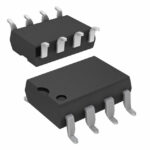 TIL192BSMT&R
The activity of extra discounts on wholesale prices is in full swing…
Please fill in your contact information and we will send you the latest wholesale price list.





