 ChipApex | Global Electronic Components Supplier
SEARCH
Search Product
Search Post
— IC芯片 | 连接器 | 传感器 | 被动器件 —
Search productSearch post
— IC芯片 | 连接器 | 传感器 | 被动器件 —
Consult the customer manager about the wholesale price.
consultation hotline:86-132-6715-2157
email:[email protected]
Contact the product manager for consultation. One-stop consultation is available.
Do you want a lower wholesale price? Please send us your inquiry and we will reply immediately.
The TIL921 is a single-channel optocoupler manufactured by Texas Instruments, designed for signal isolation applications. It features an infrared-emitting diode coupled to a phototransistor output within a compact package. The device supports high-speed switching with defined rise and fall times, ensuring reliable data transmission across the isolation barrier. Key electrical characteristics include a collector-emitter voltage rating of 80 V and a forward current capability suitable for standard logic interfacing. Operating temperatures range from -40°C to +85°C, making it suitable for industrial environments.
Verify the specific suffix code against the manufacturer's latest datasheet to confirm pinout configuration and packaging type. Ensure the component meets AEC-Q100 or relevant automotive standards if used in vehicle applications. Check for RoHS compliance status prior to ordering. Confirm availability through authorized distributors to avoid counterfeit parts. Review thermal management requirements based on the specific operating environment.
Select this component when single-channel isolation is required for digital signals. Consider the propagation delay and rise/fall times for high-frequency applications. Evaluate the isolation voltage rating against system safety requirements. Compare power consumption metrics with alternative optocouplers if energy efficiency is critical. Ensure the package size fits within the available PCB real estate constraints.
The TIL921 belongs to the broader family of Texas Instruments optocouplers, which includes various channel configurations such as dual and quad options. These devices are commonly used in interface circuits where electrical isolation is necessary to protect sensitive components from high voltages. The series offers reliability and consistency in performance across different industrial and commercial applications.
Direct substitutes may include other single-channel optocouplers from Texas Instruments or competitors like ON Semiconductor and Vishay. Verify equivalent parameters such as CTR, isolation voltage, and speed before substitution. Cross-reference pinouts to ensure compatibility with existing footprints.
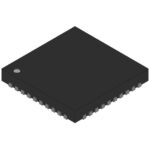 TIL921
The activity of extra discounts on wholesale prices is in full swing…
Please fill in your contact information and we will send you the latest wholesale price list.






