 ChipApex | Global Electronic Components Supplier

SEARCH
Search Product
Search Post
— IC芯片 | 连接器 | 传感器 | 被动器件 —
Search productSearch post
— IC芯片 | 连接器 | 传感器 | 被动器件 —
Consult the customer manager about the wholesale price.
consultation hotline:86-132-6715-2157
email:[email protected]
Contact the product manager for consultation. One-stop consultation is available.
Do you want a lower wholesale price? Please send us your inquiry and we will reply immediately.
TJA1080TS,112 is listed in the Specialized range at ChipApex. The manufacturer field lists NXP USA Inc.. Its product description is IC INTERFACE SPECIALIZED 20SSOP. Review the specifications below when checking this part for your BOM.
The TJA1080TS,112 is a FlexRay transceiver compliant with the FlexRay electrical physical layer specification V2.1 Rev. A. It provides an advanced interface between the protocol controller and the physical bus in a FlexRay network, supporting data transfer rates from 1 Mbit/s to 10 Mbit/s. The device can be configured as either an active star transceiver or a node transceiver. It features differential transmit and receive capabilities, excellent EMC performance, and high ESD protection. The operating supply voltage range on pin VBAT is 6.5 V to 60 V, while VCC and VIO operate within 4.75 V to 5.25 V and 2.2 V to 5.25 V respectively. The virtual junction temperature rating extends from -40 °C to +150 °C.
Verify the specific ordering suffix against the manufacturer's current product status documentation. Confirm that the package type matches the required SSOP20 footprint and ensure compliance with automotive qualification standards such as AEC-Q100 before finalizing procurement decisions.
Select this component when designing FlexRay networks requiring support for both linear passive bus and active star topologies. Ensure the host controller supports the mode control signals compatible with NXP CAN transceivers. Verify that the system power architecture accommodates the specified VBAT and VIO operating ranges for reliable operation.
The TJA1080 series belongs to NXP Semiconductors' portfolio of FlexRay transceivers designed for automotive applications. It complements other NXP interface solutions by providing specialized connectivity for high-speed, deterministic vehicle communication protocols used in safety-critical systems.
Public confirmed substitute part numbers include TJA1080ATS/1 and TJA1080TS/N. Verify functional compatibility and pinout alignment before substitution.
Configuration is determined during power-on by connecting pins TRXD0 and TRXD1 to ground for node configuration, or connecting pin TRXD0 or TRXD1 to VBUF for star configuration.
Wake-up can be triggered via a wake-up symbol on the bus lines (remote), a negative edge on the WAKE pin (local), or a positive edge on the STBN pin if VIO is present.
Yes, the device includes two inhibit switch outputs, INH1 and INH2, which can be used to switch external voltage regulators to manage power consumption.
Explore related parts through Interface, Integrated Circuits (ICs), all product categories, ChipApex homepage.
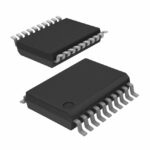 TJA1080TS,112

The activity of extra discounts on wholesale prices is in full swing…
Please fill in your contact information and we will send you the latest wholesale price list.





