 ChipApex | Global Electronic Components Supplier
SEARCH
Search Product
Search Post
— IC芯片 | 连接器 | 传感器 | 被动器件 —
Search productSearch post
— IC芯片 | 连接器 | 传感器 | 被动器件 —
Consult the customer manager about the wholesale price.
consultation hotline:86-132-6715-2157
email:[email protected]
Contact the product manager for consultation. One-stop consultation is available.
Do you want a lower wholesale price? Please send us your inquiry and we will reply immediately.
The TL16PC564APZ is a quad Universal Asynchronous Receiver/Transmitter (UART) integrated circuit manufactured by Texas Instruments, designed for PCMCIA applications. It integrates four independent UART channels within a single package, each equipped with a 16-byte FIFO buffer to enhance data throughput and reduce processor overhead. The device supports asynchronous serial communication protocols and operates on a 3.3V supply voltage. It is housed in a 64-pin TQFP package and is rated for an industrial temperature range of -40°C to +85°C. Key features include programmable baud rate generators, interrupt capabilities, and compatibility with standard RS-232 and RS-485 interfaces when paired with appropriate transceivers.
Verify the specific suffix 'APZ' corresponds to the 64-pin TQFP package and industrial temperature grade (-40°C to +85°C). Confirm that the component is lead-free and RoHS compliant as per current manufacturing standards. Ensure the ordering part number matches the exact pinout and electrical specifications required for your design, as variations may exist in older revisions or alternative packaging options.
Select this component when a compact solution for four serial ports is required in PCMCIA or similar embedded applications. Consider the 16-byte FIFO depth for buffering requirements and the 3.3V operating voltage for power compatibility. Evaluate the thermal performance within the -40°C to +85°C range against your system's environmental conditions. Compare pin counts and package dimensions against available board space constraints.
The TL16PC564 series belongs to Texas Instruments' line of multi-channel UART devices, often used in legacy and modern embedded systems requiring multiple serial connections. It is part of the broader family of PCMCIA-compatible communication controllers. This specific model represents a quad-channel variant, offering higher integration density compared to single or dual UART chips, thereby reducing overall system component count and PCB area.
Check for direct replacements like the TL16C554 variants if voltage levels differ. Verify pin-to-pin compatibility with other quad UARTs from different manufacturers if sourcing alternatives. Ensure any substitute maintains the same FIFO size and interrupt logic to avoid software redesign.
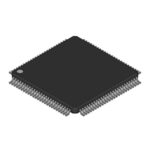 TL16PC564APZ
The activity of extra discounts on wholesale prices is in full swing…
Please fill in your contact information and we will send you the latest wholesale price list.






