 ChipApex | Global Electronic Components Supplier
SEARCH
Search Product
Search Post
— IC芯片 | 连接器 | 传感器 | 被动器件 —
Search productSearch post
— IC芯片 | 连接器 | 传感器 | 被动器件 —
Consult the customer manager about the wholesale price.
consultation hotline:86-132-6715-2157
email:[email protected]
Contact the product manager for consultation. One-stop consultation is available.
Do you want a lower wholesale price? Please send us your inquiry and we will reply immediately.
The TL16PC564BLVIPZ is a PCMCIA Universal Asynchronous Receiver Transmitter (UART) interface designed for Personal Computer Memory Card International Association (PCMCIA) subsystems. It integrates a TL16C550 ACE core with a dual-port random-access memory (DPRAM) containing a 256-byte card information structure (CIS) and eight 8-byte card configuration registers (CCR). The device supports both Intel and Zilog microcontroller subsystem interfaces, providing serial-to-parallel conversion for data transfer between a modem or DSP and the PCMCIA parallel data port. It features selectable FIFO depths of 16 bytes or 64 bytes, auto-RTS/CTS modes, and a fully prioritized interrupt system.
Verify component authenticity by checking the marking code against the official datasheet specifications. Confirm the package type matches the 100-pin Thin Quad Flatpack (PZ) requirements. Ensure the operating voltage range aligns with your system design, as the device supports both 3.3-V and 5-V supply voltages. Review the end-of-life status before finalizing procurement plans.
Select this component when designing PCMCIA cards requiring integrated UART functionality and attribute memory management. Consider the extended 64-byte FIFO mode if higher throughput is needed compared to standard 16-byte implementations. Verify compatibility with the target microcontroller architecture, as the device supports both Intel and Zilog signaling protocols through the SELZ/I pin configuration.
The TL16PC564BLVIPZ belongs to the TL16PC564 family of integrated asynchronous communications elements. It is specifically engineered to meet the PCMCIA Card Standard Release 2.01 requirements. This part combines standard UART capabilities with specialized logic for managing PCMCIA attribute memory, simplifying the design of complex communication expansion cards.
The TL16PC564BLVI is a compatible alternative within the same family. Verify pinout compatibility and electrical characteristics before substitution. Note that the base model may lack specific suffix variations regarding temperature ranges or packaging details.
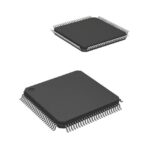 TL16PC564BLVIPZ
The activity of extra discounts on wholesale prices is in full swing…
Please fill in your contact information and we will send you the latest wholesale price list.






