 ChipApex | Global Electronic Components Supplier
SEARCH
Search Product
Search Post
— IC芯片 | 连接器 | 传感器 | 被动器件 —
Search productSearch post
— IC芯片 | 连接器 | 传感器 | 被动器件 —
Consult the customer manager about the wholesale price.
consultation hotline:86-132-6715-2157
email:[email protected]
Contact the product manager for consultation. One-stop consultation is available.
Do you want a lower wholesale price? Please send us your inquiry and we will reply immediately.
The onsemi TL431BIPG is a three-terminal programmable shunt regulator diode in an 8-pin PDIP package. It operates as a low temperature coefficient zener, providing a reference voltage of 2.495 V at 25 °C with a tolerance of ±0.4 %. The device supports a cathode current range of 1.0 mA to 100 mA and a maximum cathode-to-anode voltage of 37 V. It features a typical dynamic impedance of 0.22 Ω and a full-range temperature coefficient of 50 ppm/°C. Operating temperatures range from -40 °C to +85 °C.
Verify the specific suffix 'P' indicates the PDIP-8 package configuration before ordering. Confirm that the 'B' designation aligns with the required ±0.4% voltage reference tolerance for your application. Ensure the operating environment stays within the specified -40 °C to +85 °C range. Check for any automotive-specific prefix requirements if the application demands AEC-Q100 qualification. Always consult the latest datasheet revision for updated mechanical dimensions and marking codes.
Select the TL431BIPG when a precise, adjustable shunt reference is needed in through-hole designs. The B series offers tighter initial accuracy than standard variants, making it suitable for applications requiring strict voltage limits. Consider the PDIP-8 package for prototyping or environments where surface-mount technology is not feasible. Evaluate the thermal resistance characteristics if high power dissipation is expected in the design.
This component belongs to the TL431A, B series of programmable precision references manufactured by onsemi. These devices are widely used as replacements for traditional Zener diodes due to their superior stability and adjustability. The family includes various packages and temperature grades, with the TL431BIPG specifically representing the industrial grade version in a plastic dual in-line package.
Direct substitutes include other TL431B variants in different packages such as TL431BCDG (SOIC-8) or TL431BILPG (TO-92). Cross-brand equivalents like LM431 or KA431 may offer pin-compatible solutions but require verification of electrical parameters.
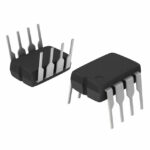 TL431BIPG
The activity of extra discounts on wholesale prices is in full swing…
Please fill in your contact information and we will send you the latest wholesale price list.





