 ChipApex | Global Electronic Components Supplier
SEARCH
Search Product
Search Post
— IC芯片 | 连接器 | 传感器 | 被动器件 —
Search productSearch post
— IC芯片 | 连接器 | 传感器 | 被动器件 —
Consult the customer manager about the wholesale price.
consultation hotline:86-132-6715-2157
email:[email protected]
Contact the product manager for consultation. One-stop consultation is available.
Do you want a lower wholesale price? Please send us your inquiry and we will reply immediately.
The TLC14ID is a monolithic Butterworth fourth-order low-pass switched-capacitor filter manufactured by Texas Instruments. It operates within a supply voltage range of ±2.25 V to ±6 V and supports an operating temperature range from -40 °C to 85 °C. The device provides a clock-to-cutoff frequency ratio of 100:1 with less than ±1% error. It accepts self-clocking, TTL-compatible, or CMOS-compatible clock inputs. Key electrical characteristics include a maximum clock frequency of 4 MHz at ±5 V supplies, a typical dynamic range of 84 dB, and a stop-band attenuation of 25 dB at twice the cutoff frequency.
Verify the specific ordering suffix against the manufacturer's current package option addendum to confirm active production status and material specifications. Ensure that the selected variant matches the required operating temperature range and packaging format for your assembly process.
Select this component when a fixed fourth-order Butterworth response is required without discrete passive components. Evaluate the external clock source requirements, as the cutoff frequency is directly determined by the input clock frequency. Confirm that the available supply voltages align with the recommended operating conditions for the desired performance level.
This device belongs to the TLC04/TLC14 family of switched-capacitor filters. The '14' designation indicates a 100:1 clock-to-cutoff frequency ratio, distinguishing it from the '04' variant which offers a 50:1 ratio. Both variants share identical pinouts and functional block diagrams but differ in their internal capacitor ratios.
Public confirmed substitute part numbers include TLC04ID (50:1 ratio) and TLC14CD (commercial temperature range). Verify compatibility regarding the clock-to-cutoff frequency ratio and operating temperature specifications before substitution.
The cutoff frequency is determined exclusively by the external clock frequency applied to the CLKIN or CLKR terminals, multiplied by the device's specific clock-to-cutoff ratio of 100:1.
The device supports self-clocking via an external RC network, TTL-compatible clocks connected to the CLKR terminal, and CMOS-compatible clocks connected to the CLKIN terminal.
At ±5 V supply voltages, the maximum clock frequency is 4 MHz.
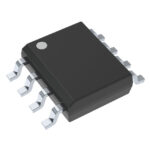 TLC14ID
The activity of extra discounts on wholesale prices is in full swing…
Please fill in your contact information and we will send you the latest wholesale price list.





