 ChipApex | Global Electronic Components Supplier
SEARCH
Search Product
Search Post
— IC芯片 | 连接器 | 传感器 | 被动器件 —
Search productSearch post
— IC芯片 | 连接器 | 传感器 | 被动器件 —
Consult the customer manager about the wholesale price.
consultation hotline:86-132-6715-2157
email:[email protected]
Contact the product manager for consultation. One-stop consultation is available.
Do you want a lower wholesale price? Please send us your inquiry and we will reply immediately.
The TLC5942RHBT is a Texas Instruments LED driver IC featuring 16 constant current outputs in a VQFN-32 package. It supports 12-bit PWM dimming and includes a 7-bit grayscale dot correction capability for uniform brightness. The device operates on a supply voltage range of 3 V to 5.5 V, with an output current of 50 mA per channel and a maximum output voltage of 32 V. It utilizes a serial interface for data input and features an internal oscillator operating at 30 MHz. The component functions within a temperature range of -40°C to +85°C.
Verify the specific suffix 'RHBT' corresponds to the VQFN-32 package and tape-and-reel delivery format. Confirm that the required 50 mA output current and 32 V compliance voltage align with the target LED load specifications. Ensure the design accounts for the thermal performance limits defined in the datasheet for the selected operating environment.
Select this component when 16 individually addressable channels with high-resolution grayscale control are required. The integrated dot correction feature makes it suitable for applications demanding high visual uniformity without external calibration hardware. Consider the VQFN-32 footprint constraints and the need for a serial data interface compatible with standard microcontrollers or shift registers.
This part belongs to the TLC594x series of LED drivers from Texas Instruments, designed for multi-channel LED control. Unlike the TLC59401 which offers higher current, or the TLC5947 with more channels, the TLC5942 balances channel count with moderate current drive and advanced correction features. It shares architectural similarities with other members of the family but differs in specific electrical ratings and pin configurations.
Potential substitutes include the TLC5942RHBR (same function, different reel packaging) or the TLC59401RHBR if higher output current is acceptable. The TLC5946RHBT may be considered if 16 channels are needed but different interface requirements apply. Verify pin compatibility and thermal characteristics before substitution.
It allows for per-channel adjustment to compensate for manufacturing variations in LED forward voltage, ensuring uniform brightness across the display.
The output current is set by an external resistor connected to the Iref pin, allowing for programmable current levels up to the maximum rating.
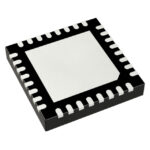 TLC5942RHBT
The activity of extra discounts on wholesale prices is in full swing…
Please fill in your contact information and we will send you the latest wholesale price list.





