 ChipApex | Global Electronic Components Supplier
SEARCH
Search Product
Search Post
— IC芯片 | 连接器 | 传感器 | 被动器件 —
Search productSearch post
— IC芯片 | 连接器 | 传感器 | 被动器件 —
Consult the customer manager about the wholesale price.
consultation hotline:86-132-6715-2157
email:[email protected]
Contact the product manager for consultation. One-stop consultation is available.
Do you want a lower wholesale price? Please send us your inquiry and we will reply immediately.
The TLC6C5712QPWPRQ1 is an automotive-grade LED driver IC featuring 12 constant-current sink channels. It supports PWM dimming with a resolution of up to 12 bits per channel and includes full diagnostic capabilities for open-load and short-to-ground detection. The device operates within a supply voltage range of 3 V to 5.5 V, delivering up to 75 mA output current per channel. It utilizes a boost topology with an internal switch and functions at frequencies up to 8 MHz. The component is housed in a 28-HTSSOP package and is qualified to AEC-Q100 standards for operation between -40°C and +125°C.
Verify the specific suffix 'PWPRQ1' corresponds to the HTSSOP-28 package and reel packaging configuration. Confirm that the Q1 designation aligns with AEC-Q100 Grade 1 requirements for your target temperature range. Ensure input voltage levels remain within the specified 3 V to 5.5 V limits during system integration. Cross-reference the datasheet revision date to confirm compatibility with existing design specifications.
Select this component when 12-channel precision control is required alongside robust diagnostic feedback. The 75 mA output capability suits standard automotive LED arrays. Consider the 12-bit resolution for smooth dimming transitions in sensitive lighting environments. Evaluate the HTSSOP-28 footprint against available PCB space constraints. Verify thermal management needs given the 125°C maximum operating temperature rating.
This part belongs to the TLC6C571x family of automotive LED drivers from Texas Instruments. It shares architectural similarities with other members like the TLC6C5716 but offers fewer channels. The series is designed specifically for demanding automotive environments requiring high reliability and detailed fault reporting. It complements broader lighting control solutions by providing dedicated driver functionality.
The TLC6C5716QPWPRQ1 serves as a direct substitute offering 16 channels instead of 12, maintaining similar diagnostic features and package type. Designers must account for pinout compatibility and software configuration differences when migrating between these variants. No other cross-model replacements are confirmed in public documentation.
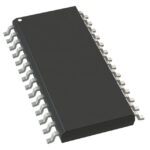 TLC6C5712QPWPRQ1
The activity of extra discounts on wholesale prices is in full swing…
Please fill in your contact information and we will send you the latest wholesale price list.





