 ChipApex | Global Electronic Components Supplier
SEARCH
Search Product
Search Post
— IC芯片 | 连接器 | 传感器 | 被动器件 —
Search productSearch post
— IC芯片 | 连接器 | 传感器 | 被动器件 —
Consult the customer manager about the wholesale price.
consultation hotline:86-132-6715-2157
email:[email protected]
Contact the product manager for consultation. One-stop consultation is available.
Do you want a lower wholesale price? Please send us your inquiry and we will reply immediately.
The TLD2314ELXUMA1 is a three-channel high-side LED driver IC from Infineon’s LITIX™ Basic family, designed for automotive lighting applications. It operates within an input voltage range of 5.5 V to 40 V and delivers a constant output current of 120 mA per channel. The device utilizes a boost topology and supports PWM control for dimming. It is qualified to AEC-Q100 standards and functions reliably across a temperature range of -40°C to +150°C. Packaged in a PG-SSOP-14 with exposed pad, it features integrated short circuit and thermal protection.
Verify the complete part number including the suffix XUMA1 to ensure correct tape-and-reel packaging configuration. Confirm that the specific revision level matches the design requirements, as manufacturing updates may occur without functional changes. Cross-reference the datasheet version date against the procurement order to ensure compatibility with latest safety and performance specifications.
Select this component when a robust, automotive-grade solution for driving multiple LEDs is required. It is suitable for designs needing high-side switching with integrated protection mechanisms. Consider the PG-SSOP-14 package constraints for PCB layout. Ensure the application voltage remains within the specified 5.5 V to 40 V window to maintain optimal operation and longevity of the driver circuitry.
This device belongs to the LITIX™ Basic series, which focuses on providing reliable, cost-effective solutions for standard automotive lighting tasks. It complements higher-end drivers by offering essential protection and control features in a compact form factor. The series is widely used in OEM and aftermarket automotive lighting assemblies where durability under harsh environmental conditions is critical.
Direct substitutes within the same family include other TLD23xx variants with differing channel counts or current ratings. Verify pin-to-pin compatibility before substitution. Alternative manufacturers may offer similar boost-type LED drivers, but automotive qualification and specific protection feature sets must be validated independently.
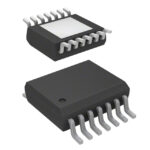 TLD2314ELXUMA1
The activity of extra discounts on wholesale prices is in full swing…
Please fill in your contact information and we will send you the latest wholesale price list.





