 ChipApex | Global Electronic Components Supplier
SEARCH
Search Product
Search Post
— IC芯片 | 连接器 | 传感器 | 被动器件 —
Search productSearch post
— IC芯片 | 连接器 | 传感器 | 被动器件 —
Consult the customer manager about the wholesale price.
consultation hotline:86-132-6715-2157
email:[email protected]
Contact the product manager for consultation. One-stop consultation is available.
Do you want a lower wholesale price? Please send us your inquiry and we will reply immediately.
The TLV431ASN1T1 is a low voltage precision adjustable shunt regulator from the TLV431B series, manufactured by onsemi. It features a guaranteed reference accuracy of ±0.5% at 25°C and ±1.0% over the industrial temperature range of -40°C to 85°C. The device operates with a programmable output voltage range from 1.24 V to 16 V. It exhibits a sharp low current turn-on characteristic and maintains a low dynamic impedance of 0.25 Ω (typical) over an operating cathode current range of 0.1 mA to 20 mA. The component is housed in a micro-size SOT-23-3 package.
Verify the specific suffix 'SN1' corresponds to the SOT-23-3 package configuration required for your PCB layout. Confirm that the 'TLV431B' designation aligns with your precision requirements, as it offers tighter tolerance than the 'A' series. Ensure compliance with RoHS standards if lead-free materials are mandated for your assembly process. Cross-reference the ordering information to confirm availability in tape and reel formats for automated manufacturing.
Select this component when precise voltage referencing is critical within a compact footprint. The B-series accuracy makes it suitable for applications demanding tight tolerance control without external trimming. Consider the SOT-23-3 package for space-constrained designs requiring surface mount technology. Evaluate the operating current range to ensure compatibility with the load requirements of your specific circuit topology.
This part belongs to the TLV431 family of low voltage precision adjustable shunt regulators. It serves as a direct replacement for traditional Zener diodes in numerous analog and digital circuits. The family includes variants with different accuracies and packages, such as TO-92 and TSOP-5, allowing designers to choose based on cost, size, and performance needs.
The TLV431A series is a lower-cost alternative with ±1.0% accuracy. Other manufacturers offer pin-compatible shunt regulators, but electrical characteristics may vary. Verify thermal resistance and stability boundaries when substituting with components from different vendors.
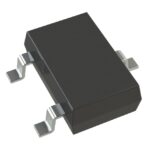 TLV431ASN1T1
The activity of extra discounts on wholesale prices is in full swing…
Please fill in your contact information and we will send you the latest wholesale price list.





