 ChipApex | Global Electronic Components Supplier
SEARCH
Search Product
Search Post
— IC芯片 | 连接器 | 传感器 | 被动器件 —
Search productSearch post
— IC芯片 | 连接器 | 传感器 | 被动器件 —
Consult the customer manager about the wholesale price.
consultation hotline:86-132-6715-2157
email:[email protected]
Contact the product manager for consultation. One-stop consultation is available.
Do you want a lower wholesale price? Please send us your inquiry and we will reply immediately.
The TPA2000D1PWG4 is a 2-W mono bridge-tied-load (BTL) Class-D audio power amplifier from Texas Instruments. It operates on a single supply voltage ranging from 2.7 V to 5.5 V and delivers up to 2 W of continuous output power into a 4-Ω load with less than 1% total harmonic distortion plus noise (THD+N). The device utilizes third-generation modulation technology optimized for filterless operation, achieving high efficiency of 75% to 85% into an 8-Ω load. Key electrical characteristics include a low-noise floor of 40 µV RMS, a shutdown current of 0.05 µA, and a power supply rejection ratio (PSRR) of -77 dB at 5 V. It features four internal gain settings selectable via digital inputs.
Verify the specific ordering suffix 'G4' corresponds to lead-free and RoHS-compliant manufacturing standards as defined by Texas Instruments. Confirm that the package type matches the required PCB footprint, as the component is available in both TSSOP and MicroStar Junior BGA configurations. Ensure the procurement channel provides valid traceability documentation for production-grade semiconductor components.
Select this amplifier for applications prioritizing high efficiency and minimal external component count due to its filterless design. Consider the input impedance variations associated with different gain settings when designing the input coupling network. Verify that the target speaker impedance is at least 4 Ω to ensure stable operation and meet specified power output ratings without triggering protection circuits.
This component belongs to the TPA2000Dx family of Class-D audio amplifiers. It represents Texas Instruments' third-generation technology designed to optimize the trade-off between audio fidelity and power consumption. The device is engineered specifically for low-voltage single-supply operations, making it suitable for modern portable electronics where battery life and board space are critical constraints.
Direct functional substitutes within the same family include the TPA2000D1PW and TPA2000D1GQCR. When replacing, verify that the pinout compatibility matches the original package type (TSSOP vs. BGA) and that the replacement part meets the same thermal and electrical operating conditions.
The switching frequency is set externally using a resistor connected to the ROSC pin and a capacitor connected to the COSC pin. The recommended values center the frequency at 250 kHz, which optimizes audio fidelity and efficiency.
At supply voltages of 3.3 V or lower, the common-mode input range may be exceeded upon exiting shutdown, causing output offset voltage until inputs settle. Adding 1-MΩ resistors to form voltage dividers biases the inputs to VDD/2, minimizing this effect.
Yes, the device uses a modulation scheme optimized to operate without an LC output filter. This reduces EMI shielding requirements and component count, provided the speaker leads are kept short (eight inches or less) to pass emissions standards.
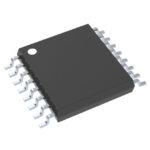 TPA2000D1PWG4
The activity of extra discounts on wholesale prices is in full swing…
Please fill in your contact information and we will send you the latest wholesale price list.





