 ChipApex | Global Electronic Components Supplier
SEARCH
Search Product
Search Post
— IC芯片 | 连接器 | 传感器 | 被动器件 —
Search productSearch post
— IC芯片 | 连接器 | 传感器 | 被动器件 —
Consult the customer manager about the wholesale price.
consultation hotline:86-132-6715-2157
email:[email protected]
Contact the product manager for consultation. One-stop consultation is available.
Do you want a lower wholesale price? Please send us your inquiry and we will reply immediately.
The TPA3116D2DAD is a stereo Class-D audio power amplifier manufactured by Texas Instruments. It operates within a supply voltage range of 4.5 V to 26 V and delivers up to 50 W per channel into a 4 Ω load at 21 V. The device features a total harmonic distortion plus noise (THD+N) of 0.1% and utilizes a 32-pin HTSSOP package with an exposed PowerPAD for thermal management. It supports both differential and single-ended inputs, includes integrated SpeakerGuard protection, and offers selectable BD or AD modulation schemes.
Verify the specific suffix 'DAD' corresponds to the HTSSOP-32 package with the PowerPAD oriented upward, which requires external heatsinking. Confirm RoHS compliance status and moisture sensitivity level (MSL 3) during storage handling. Ensure the ordering part number matches the required packaging type, as tape-and-reel variants carry different suffixes such as 'R'. Cross-reference datasheet revisions to confirm pinout consistency.
Select this component when high output power density is required in a compact form factor without complex output filtering. It is suitable for designs needing robust built-in protection mechanisms to safeguard connected speakers. Consider the thermal requirements of the exposed pad layout for PCB design. Evaluate the need for differential versus single-ended input stages based on the upstream signal source capabilities.
This device belongs to the TPA31xxD2 series of efficient D-class amplifiers from Texas Instruments. It serves as a high-power solution within the lineup, offering superior performance compared to lower-power variants like the TPA3118D2. The series is widely recognized for its balance of audio fidelity, efficiency, and ease of implementation in consumer audio electronics.
The TPA3126D2DAD is a pin-to-pin compatible upgrade within the same family, offering improved standby current characteristics. Designers should verify that any substitute maintains the same 32-pin HTSSOP footprint and thermal pad configuration to ensure mechanical compatibility.
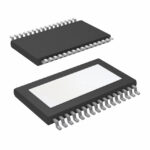 TPA3116D2DAD
The activity of extra discounts on wholesale prices is in full swing…
Please fill in your contact information and we will send you the latest wholesale price list.






