 ChipApex | Global Electronic Components Supplier
SEARCH
Search Product
Search Post
— IC芯片 | 连接器 | 传感器 | 被动器件 —
Search productSearch post
— IC芯片 | 连接器 | 传感器 | 被动器件 —
Consult the customer manager about the wholesale price.
consultation hotline:86-132-6715-2157
email:[email protected]
Contact the product manager for consultation. One-stop consultation is available.
Do you want a lower wholesale price? Please send us your inquiry and we will reply immediately.
The TPA6203A1ZQVRG1 is a 1.25-W mono fully differential audio power amplifier manufactured by Texas Instruments. It operates from a single supply voltage ranging from 2.5 V to 5.5 V, delivering 1.25 W into an 8-Ω load at 5 V with 1% THD+N. The device features low quiescent current of 1.7 mA and shutdown current below 1 µA. It utilizes a MicroStar Junior BGA package (2 mm x 2 mm) to minimize PCB area. Key electrical characteristics include a power supply rejection ratio of -90 dB and common-mode rejection ratio exceeding -70 dB.
Verify that the ZQV suffix indicates a lead-free option qualified for 260°C lead-free assembly processes. Confirm the R suffix denotes taped and reeled packaging. Ensure compatibility with standard surface-mount assembly techniques for the MicroStar Junior BGA package. Check for specific symbolization codes on received units to match ordering documentation.
Select this component when space constraints require a small footprint amplifier with high efficiency. The fully differential design is advantageous for rejecting common-mode noise in mobile devices. Consider the thermal dissipation requirements based on the load impedance and supply voltage. Verify that the input source can be biased within the specified common-mode range to utilize the capacitor-less input feature.
This part belongs to the TPA6203A1 family of Class-AB audio amplifiers. The ZQV variant specifically refers to the lead-free MicroStar Junior BGA package. It is designed to replace traditional single-ended amplifiers that require large output coupling capacitors, thereby reducing overall system cost and board size in portable electronics.
Direct substitutes include the TPA6203A1GQVR, which uses the standard GQV package instead of the lead-free ZQV option. Both variants share identical electrical specifications and pinouts. Ensure that any replacement maintains the same package dimensions and thermal characteristics for proper fitment.
No, the bypass capacitor is optional due to the fully differential design. However, adding one can improve power supply rejection ratio and filter noise on the mid-supply pin.
The maximum recommended junction temperature is 125°C. The device includes thermal protection that shuts down the amplifier if the junction temperature exceeds 150°C.
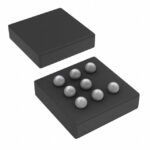 TPA6203A1ZQVRG1
The activity of extra discounts on wholesale prices is in full swing…
Please fill in your contact information and we will send you the latest wholesale price list.





