 ChipApex | Global Electronic Components Supplier
SEARCH
Search Product
Search Post
— IC芯片 | 连接器 | 传感器 | 被动器件 —
Search productSearch post
— IC芯片 | 连接器 | 传感器 | 被动器件 —
Consult the customer manager about the wholesale price.
consultation hotline:86-132-6715-2157
email:[email protected]
Contact the product manager for consultation. One-stop consultation is available.
Do you want a lower wholesale price? Please send us your inquiry and we will reply immediately.
The TPS2383APM is an IEEE 802.3af-compliant Power over Ethernet (PoE) controller manufactured by Texas Instruments, designed for use as a Powered Device (PD). It integrates a high-voltage power switch and supports up to eight channels of PoE input. The device operates with a supply voltage range of 3V to 3.6V and handles input voltages from 44V to 57V. It features a 64-LQFP package measuring 10x10 mm. The controller provides comprehensive protection mechanisms including reverse polarity, short circuit, and thermal shutdown. It is rated for operation within a temperature range of 0°C to 70°C and consumes a typical supply current of 5mA.
Verify component authenticity through authorized distributors due to potential availability constraints. Confirm package integrity upon receipt, as surface-mount devices are sensitive to mechanical stress. Check manufacturing date codes to ensure compliance with current environmental regulations such as RoHS. Validate pin alignment and solder joint quality during assembly to prevent electrical faults. Review the official datasheet for specific handling and storage requirements regarding moisture sensitivity levels.
Select this controller when designing systems that require multiple PoE inputs managed by a single microcontroller unit. It is suitable for applications needing strict adherence to IEEE 802.3af standards without external switching components. Consider the 64-LQFP footprint for PCB layout constraints. Evaluate thermal performance requirements based on the expected load across all channels. Ensure the host processor can interface correctly with the control signals provided by the IC.
The TPS2383 series belongs to Texas Instruments' portfolio of PoE controllers aimed at simplifying PD design. It replaces discrete solutions by integrating detection, classification, and power delivery logic. The APM suffix indicates a specific package variant within the broader TPS2383 family. This component enables compact designs for networked devices by reducing bill-of-materials complexity and board space usage compared to traditional multi-component approaches.
Public confirmed substitute part numbers are not available in the provided documentation.
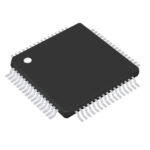 TPS2383APM
The activity of extra discounts on wholesale prices is in full swing…
Please fill in your contact information and we will send you the latest wholesale price list.






