 ChipApex | Global Electronic Components Supplier
SEARCH
Search Product
Search Post
— IC芯片 | 连接器 | 传感器 | 被动器件 —
Search productSearch post
— IC芯片 | 连接器 | 传感器 | 被动器件 —
Consult the customer manager about the wholesale price.
consultation hotline:86-132-6715-2157
email:[email protected]
Contact the product manager for consultation. One-stop consultation is available.
Do you want a lower wholesale price? Please send us your inquiry and we will reply immediately.
The TPS61061YZFR is a constant current LED driver IC from Texas Instruments, designed for white LED power supplies. It features a boost converter topology with a fixed switching frequency of 1 MHz. The device supports an input voltage range of 2.7 V to 6 V and delivers a regulated output current of 400 mA. It provides a maximum output voltage of 19 V. The component is housed in an 8-DSBGA package and operates within a temperature range of -40°C to +85°C.
Verify the specific suffix 'YZFR' against the manufacturer's latest datasheet to confirm availability status, as some listings indicate this variant may be obsolete or have limited lifecycle support. Ensure the ordering part number matches the required tape and reel configuration for surface-mount assembly processes. Cross-reference the DSBGA-8 package dimensions with your PCB footprint library to guarantee mechanical compatibility during procurement and integration.
Select this component when a compact solution is required for driving white LEDs from a single-cell lithium-ion battery or similar low-voltage source. The 1 MHz frequency allows for smaller inductors compared to lower-frequency alternatives. Consider the 400 mA output limit and 19 V maximum voltage constraints to ensure the target LED string configuration remains within the device's electrical boundaries without exceeding thermal or current ratings.
This part belongs to the TPS6106x series of LED drivers from Texas Instruments. It shares architectural similarities with the TPS61060 but offers higher output voltage capabilities. The series is characterized by its small DSBGA packaging and integrated power switch, targeting space-constrained portable electronics where efficiency and minimal board area are critical design priorities.
The TPS61060YZFR is a related variant within the same family, offering similar functionality with a lower maximum output voltage of 15 V. Verify if the application requires the higher 19 V headroom provided by the TPS61061 before substituting. Check current lifecycle status for both parts to ensure supply chain continuity.
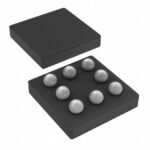 TPS61061YZFR
The activity of extra discounts on wholesale prices is in full swing…
Please fill in your contact information and we will send you the latest wholesale price list.





