 ChipApex | Global Electronic Components Supplier
SEARCH
Search Product
Search Post
— IC芯片 | 连接器 | 传感器 | 被动器件 —
Search productSearch post
— IC芯片 | 连接器 | 传感器 | 被动器件 —
Consult the customer manager about the wholesale price.
consultation hotline:86-132-6715-2157
email:[email protected]
Contact the product manager for consultation. One-stop consultation is available.
Do you want a lower wholesale price? Please send us your inquiry and we will reply immediately.
The TPS61193PWPR is a high-performance, three-channel LED driver IC from Texas Instruments. It features an integrated DC-DC converter supporting both boost and SEPIC topologies to accommodate various input voltage configurations. The device operates with an input voltage range of 4.5 V to 40 V and delivers up to 100 mA per channel. It includes three high-precision current sinks with typical current matching of 1%. The switching frequency is adjustable from 300 kHz to 2.2 MHz. The package is a 20-pin HTSSOP, and it supports PWM dimming with a ratio of 10,000:1 at frequencies up to 200 Hz.
Verify the specific ordering suffix to ensure the correct package type and tape-and-reel quantity match your assembly requirements. Confirm that the component meets the required automotive or industrial qualification standards if applicable to your end-use environment. Check for any recent lifecycle notices regarding obsolescence or replacement recommendations from the manufacturer before finalizing procurement plans.
Select this component when a multi-channel LED driver with integrated power conversion is needed. Ensure the application requires SEPIC or boost topology support based on the battery or supply voltage profile. Verify that the required current matching accuracy and dimming performance align with the system's optical specifications. Consider the thermal management capabilities of the HTSSOP package for the expected power dissipation levels.
This part belongs to the TPS61193 family of LED drivers designed for high efficiency and low EMI. It is distinct from single-channel or non-integrated solutions by providing three synchronized current sinks within a compact package. The device addresses the need for simplified bill of materials in multi-LED architectures by combining control and power stages.
Check for the TPS61193-Q1 variant if automotive qualification is required. Verify pin-to-pin compatibility with existing designs if considering alternative suppliers. Review updated datasheets for any changes in recommended operating conditions or application circuits compared to previous revisions.
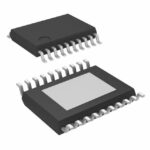 TPS61193PWPR
The activity of extra discounts on wholesale prices is in full swing…
Please fill in your contact information and we will send you the latest wholesale price list.





