 ChipApex | Global Electronic Components Supplier
SEARCH
Search Product
Search Post
— IC芯片 | 连接器 | 传感器 | 被动器件 —
Search productSearch post
— IC芯片 | 连接器 | 传感器 | 被动器件 —
Consult the customer manager about the wholesale price.
consultation hotline:86-132-6715-2157
email:[email protected]
Contact the product manager for consultation. One-stop consultation is available.
Do you want a lower wholesale price? Please send us your inquiry and we will reply immediately.
The TPS92075DDCR/NOPB is a non-isolated, phase-dimmable buck power factor correction (PFC) LED driver from Texas Instruments. It integrates a digital reference control system for precise regulation. The device operates within an input voltage range of 11 V and supports an output current capability of 5 A. It features adjustable switching frequency and functions across a wide temperature range from -40°C to +125°C. The component is housed in a SOT-23-THIN-6 package and includes protection mechanisms such as thermal shutdown and soft start functionality.
Verify the specific ordering suffix DDCR against the manufacturer's official documentation to ensure correct packaging and tape-and-reel specifications. Confirm that the SOT-23-THIN-6 package variant matches the design-in requirements. Cross-reference the TPS92075 series datasheet for any updates on recommended operating conditions or pin configuration changes prior to final procurement.
Select this component when a non-isolated topology is acceptable and space constraints require a compact SOT-23-THIN-6 package. It is suitable for designs needing integrated digital phase-angle decoding without external microcontrollers. Ensure the application does not exceed the 11 V input limit or require isolation barriers, as this device is designed for non-isolated buck PFC configurations.
This part belongs to the TPS92075 family of LED lighting drivers. It shares functional similarities with other variants like the TPS92075DR/NOPB but differs in package type and pinout. The DDCR suffix specifically denotes the thin SOT-23 package, distinguishing it from standard SOIC versions while maintaining the same core digital control architecture.
The TPS92075DR/NOPB serves as a direct alternative with identical electrical characteristics but utilizes an 8-SOIC package instead of the SOT-23-THIN-6. Verify pin-to-pin compatibility and thermal management requirements when substituting, as the package change affects footprint and heat dissipation properties.
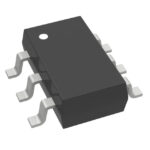 TPS92075DDCR/NOPB
The activity of extra discounts on wholesale prices is in full swing…
Please fill in your contact information and we will send you the latest wholesale price list.





