 ChipApex | Global Electronic Components Supplier
SEARCH
Search Product
Search Post
— IC芯片 | 连接器 | 传感器 | 被动器件 —
Search productSearch post
— IC芯片 | 连接器 | 传感器 | 被动器件 —
Consult the customer manager about the wholesale price.
consultation hotline:86-132-6715-2157
email:[email protected]
Contact the product manager for consultation. One-stop consultation is available.
Do you want a lower wholesale price? Please send us your inquiry and we will reply immediately.
The TS5USBC400IYFPR is a dual 2:1 USB 2.0 multiplexer/demultiplexer or single-ended crossbar switch manufactured by Texas Instruments. It operates within a supply voltage range of 2.3 V to 5.5 V and supports a maximum DC switch current of 100 mA. The device features a maximum on-resistance of 9 Ohms and a bandwidth of 1.1 GHz. Electrical specifications include a maximum turn-on time of 250 us and a maximum turn-off time of 1 us. The quiescent current is 72 uA. It functions in temperatures from -40°C to +85°C and is housed in a DSBGA-12 package.
Verify the specific suffix IYFPR against the manufacturer's official datasheet to confirm the industrial temperature grade (-40°C to +85°C) and DSBGA-12 packaging configuration. Ensure compatibility with system voltage requirements between 2.3 V and 5.5 V. Cross-reference the part number with authorized distributors to validate authenticity and check for any recent design changes or obsolescence notices issued by Texas Instruments.
Select this component when designing circuits that require bidirectional switching for USB 2.0 differential pairs in compact form factors. The 1.1 GHz bandwidth supports high-speed data transmission standards. Consider the 16V overvoltage protection if the application environment poses risks of electrical overstress. Compare against the TS5USBC402 series if higher bandwidth (1.2 GHz) or extended voltage protection (20V) is required for the specific system architecture.
This device belongs to the TS5USBC400 series of USB switch ICs designed for mobile and portable applications. It shares the same DSBGA-12 footprint and core switching functionality with variants like the TS5USBC400YFPR, differing primarily in temperature rating and packaging options. The series addresses the need for efficient signal routing in modern USB Type-C ecosystems while minimizing board space.
The TS5USBC400YFPR serves as a direct functional substitute with identical electrical characteristics but potentially different commercial temperature grading. Verify pinout compatibility and thermal performance before substitution.
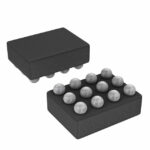 TS5USBC400IYFPR
The activity of extra discounts on wholesale prices is in full swing…
Please fill in your contact information and we will send you the latest wholesale price list.





