 ChipApex | Global Electronic Components Supplier
SEARCH
Search Product
Search Post
— IC芯片 | 连接器 | 传感器 | 被动器件 —
Search productSearch post
— IC芯片 | 连接器 | 传感器 | 被动器件 —
Consult the customer manager about the wholesale price.
consultation hotline:86-132-6715-2157
email:[email protected]
Contact the product manager for consultation. One-stop consultation is available.
Do you want a lower wholesale price? Please send us your inquiry and we will reply immediately.
The TS5USBC402YFPT is a dual-port USB 2.0 analog switch manufactured by Texas Instruments, designed for high-speed data line routing in compact electronic systems. It features a 12-pin DSBGA package and operates within a supply voltage range of 2.3 V to 5.5 V. The device supports a typical bandwidth of 1.2 GHz and maintains a maximum on-resistance of 9 Ohms. It includes integrated overvoltage protection capable of withstanding up to 20 V on I/O pins, alongside automatic shutdown circuits. The component functions as a bidirectional 2:1 or 1:2 multiplexer/demultiplexer, optimized for USB Type-C applications.
Verify the specific suffix YFPT against official Texas Instruments documentation to confirm the commercial temperature grade (0°C to +70°C) and reel packaging configuration. Ensure that the ordering information matches the exact pinout and electrical specifications required for the target design, as suffix variations may indicate different thermal ratings or packaging formats.
Select this component when designing for USB 2.0 data lines where low insertion loss and high bandwidth are critical. The 1.2 GHz bandwidth ensures signal integrity for High-Speed transfers. Consider the 12-DSBGA package size for strict board space limitations. Verify that the 2.3 V minimum supply voltage aligns with the system's power rails and that the 9 Ohm on-resistance meets the impedance matching requirements of the application.
This part belongs to the TS5USBC402 family of dual-port USB 2.0 analog switches. It shares architectural similarities with variants like the TS5USBC400IYFPT but differs in specific performance metrics such as bandwidth and temperature rating. The family is engineered specifically for protecting and routing USB 2.0 D+/- signals in modern consumer electronics.
The TS5USBC400IYFPT serves as a functional alternative within the same series, offering similar switching capabilities. Designers should verify differences in bandwidth specifications and temperature ranges before substitution to ensure compatibility with existing PCB layouts and thermal constraints.
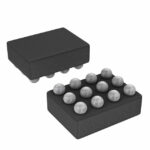 TS5USBC402YFPT
The activity of extra discounts on wholesale prices is in full swing…
Please fill in your contact information and we will send you the latest wholesale price list.





