 ChipApex | Global Electronic Components Supplier
SEARCH
Search Product
Search Post
— IC芯片 | 连接器 | 传感器 | 被动器件 —
Search productSearch post
— IC芯片 | 连接器 | 传感器 | 被动器件 —
Consult the customer manager about the wholesale price.
consultation hotline:86-132-6715-2157
email:[email protected]
Contact the product manager for consultation. One-stop consultation is available.
Do you want a lower wholesale price? Please send us your inquiry and we will reply immediately.
The TS5V330PW is a quad single-pole double-throw (SPDT) video switch integrated circuit manufactured by Texas Instruments. It operates on a single supply voltage ranging from 4.5 V to 5.5 V, with a nominal operating voltage of 5 V. The device features four independent channels, each capable of switching analog video signals. Key electrical specifications include a maximum on-state resistance of 10 Ohms and a -3dB bandwidth of at least 250 MHz. The package is a 16-TSSOP surface-mount type. Switching performance includes a maximum turn-on time of 6 ns and a maximum turn-off time of 6 ns. The component supports an RGB signal configuration and provides bidirectional signal flow.
Verify the specific ordering suffix 'PW' corresponds to the TSSOP-16 tube packaging when sourcing. Confirm that the required supply voltage range aligns with the 4.5 V to 5.5 V specification. Ensure the application environment remains within the -40°C to +85°C operating temperature limits. Cross-reference the manufacturer part number directly with Texas Instruments documentation to avoid counterfeit components.
Select this component when a quad SPDT switch is required for 5 V video systems. Compare against the TS5V330CDR if SOIC-16 packaging is preferred instead of TSSOP. Consider the TS3V330 series only if the system operates at lower voltages (3 V to 3.6 V), noting that the TS3V330PW is marked as obsolete. Verify that the 250 MHz bandwidth meets the specific video resolution requirements.
The TS5V330PW belongs to the TS5V330 family of wide-bandwidth video switches. It shares functional similarities with other members like the TS5V330CDR but differs in package style. The 'PW' suffix specifically denotes the 16-pin Thin Shrink Small Outline Package (TSSOP). This family is designed for applications requiring low distortion and fast switching speeds in video signal paths.
The TS5V330CDR is a pin-compatible alternative in SOIC-16 packaging. The TS3V330PW offers similar functionality but operates at a lower voltage range (3 V–3.6 V) and is currently obsolete. No direct active substitutes are confirmed in the provided data.
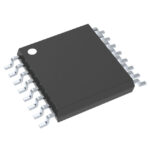 TS5V330PW
The activity of extra discounts on wholesale prices is in full swing…
Please fill in your contact information and we will send you the latest wholesale price list.





