 ChipApex | Global Electronic Components Supplier
SEARCH
Search Product
Search Post
— IC芯片 | 连接器 | 传感器 | 被动器件 —
Search productSearch post
— IC芯片 | 连接器 | 传感器 | 被动器件 —
Consult the customer manager about the wholesale price.
consultation hotline:86-132-6715-2157
email:[email protected]
Contact the product manager for consultation. One-stop consultation is available.
Do you want a lower wholesale price? Please send us your inquiry and we will reply immediately.
The UCC21320QDWKQ1 is an automotive-grade, current-isolated dual-channel gate driver manufactured by Texas Instruments. It features a SOIC-14 package and operates within a temperature range of -40°C to +125°C. The device provides galvanic isolation with a rating of 3.75kVrms. Electrical specifications include a peak source output current of 4A and a peak sink output current of 6A. The input supply voltage (VCCI) ranges from 3V to 18V. Key timing parameters include a maximum propagation delay of 30ns, a rise time of 6ns, and a fall time of 7ns. The power dissipation is rated at 1.05W.
Verify the specific suffix 'DWKQ1' against the manufacturer's official documentation to ensure correct packaging and automotive qualification status. Confirm that the component meets the required AEC-Q100 grade specifications for your target application environment. Check for any recent Product Change Notifications regarding manufacturing site or material changes.
Select this component when designing circuits requiring high-speed isolated gate driving for automotive power stages. Ensure the PCB layout supports the SOIC-14 package dimensions and thermal requirements. Verify that the controller logic levels are compatible with the 3V to 18V input range. Consider the 3.75kVrms isolation barrier requirement for safety compliance in high-voltage sections.
This part belongs to the UCC21320 series of isolated gate drivers. It is specifically designed for automotive applications, indicated by the 'Q1' designation. The device integrates current isolation technology to provide reliable operation in noisy environments common in electric vehicle powertrains and other automotive electronic control units.
The UCC21320QDWKRQ1 is a listed alternative variant within the same product family, differing primarily in reel packaging rather than functional characteristics. Verify pinout compatibility and electrical specifications before substitution.
The device is designed to drive power devices up to 5MHz, leveraging its low propagation delay and pulse-width distortion characteristics.
Yes, the datasheet explicitly states that the device is suitable for driving SiC MOSFETs in addition to standard MOSFETs and IGBTs.
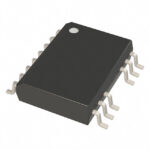 UCC21320QDWKQ1
The activity of extra discounts on wholesale prices is in full swing…
Please fill in your contact information and we will send you the latest wholesale price list.





