 ChipApex | Global Electronic Components Supplier
SEARCH
Search Product
Search Post
— IC芯片 | 连接器 | 传感器 | 被动器件 —
Search productSearch post
— IC芯片 | 连接器 | 传感器 | 被动器件 —
Consult the customer manager about the wholesale price.
consultation hotline:86-132-6715-2157
email:[email protected]
Contact the product manager for consultation. One-stop consultation is available.
Do you want a lower wholesale price? Please send us your inquiry and we will reply immediately.
The UCC5519PWPR is a multimode SCSI terminator manufactured by Texas Instruments, designed for small computer system interface applications. It operates within a supply voltage range of 2.7 V to 5.25 V and supports SCSI-2, Ultra2 (SPI-2), Ultra3/Ultra160 (SPI-3), and Ultra320 (SPI-4) standards. The device integrates an SPI-3 mode change delay function ranging from 100 ms to 300 ms. It features a minimum source regulator current of 225 mA in single-ended mode and maintains a channel capacitance of 3 pF. The component is housed in a 28-pin TSSOP package with the PWP suffix.
Verify that the ordering suffix 'R' confirms the taped and reeled packaging format containing 2,500 devices per reel. Confirm the specific package variant matches the required thermal pad configuration for the target PCB layout. Ensure the operating temperature range aligns with the commercial specification limits defined in the datasheet.
Select this component for designs requiring compliance with multiple SCSI generations without manual switching. Verify that the board layout accommodates the 28-pin PowerPAD TSSOP package dimensions. Ensure the power supply circuitry can support the peak sink currents required during Single-Ended operation modes.
This part belongs to the UCC5519 family of SCSI terminators produced by Texas Instruments. The PWPR designation specifically indicates the plastic TSSOP-28 package variant supplied in a tape-and-reel format. This series addresses the need for automated termination management in evolving SCSI environments.
The datasheet notes pin compatibility with the SS-AR7519. Designers should verify electrical parameter alignment before substituting this component with other multimode SCSI terminators or legacy equivalents.
When HVD SCSI drivers are detected on the bus, the device disconnects all terminating resistors and enters a high-impedance state to prevent signal interference.
The digital filter provides a mode change delay between 100 ms and 300 ms, ensuring stable mode transitions and preventing false triggering due to noise on the bus.
Yes, the device automatically detects the bus type via the DIFFSENSE line and configures itself for either LVD or SE operation based on the voltage levels present.
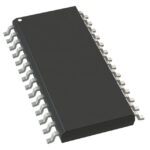 UCC5519PWPR
The activity of extra discounts on wholesale prices is in full swing…
Please fill in your contact information and we will send you the latest wholesale price list.





