 ChipApex | Global Electronic Components Supplier
SEARCH
Search Product
Search Post
— IC芯片 | 连接器 | 传感器 | 被动器件 —
Search productSearch post
— IC芯片 | 连接器 | 传感器 | 被动器件 —
Consult the customer manager about the wholesale price.
consultation hotline:86-132-6715-2157
email:[email protected]
Contact the product manager for consultation. One-stop consultation is available.
Do you want a lower wholesale price? Please send us your inquiry and we will reply immediately.
The UCC5606PWPTR is a 9-line active terminator for SCSI parallel buses, designed to comply with SCSI, SCSI-2, and SPI-2 standards. It operates within a supply voltage range of 2.7 V to 5.25 V and features an internal regulator providing a 2.7 V reference. The device supports programmable termination impedance of either 110 Ω or 2.5 kΩ, with factory-trimmed tolerance of 7% for impedance and 4% for current. In disconnect mode, the supply current drops to a typical 0.5 µA, while channel capacitance remains at 1.8 pF. It provides ±400 mA sourcing and sinking capabilities and includes thermal shutdown protection.
Verify component authenticity through authorized TI distributors or direct manufacturer channels. Confirm the specific package type matches design requirements, as the PWP suffix indicates a TSSOP-24 housing. Review the latest datasheet revision for any updates to electrical characteristics or pin configurations before finalizing procurement specifications.
Select this component when designing SCSI interfaces requiring active termination with hot-plug support. Ensure the system voltage falls within the 2.7 V to 5.25 V operating range. Consider the TSSOP-24 package constraints regarding thermal dissipation and board space. Verify that the required termination impedance aligns with the bus length specifications provided in the application notes.
This part belongs to the UCC5606 family of SCSI terminators manufactured by Texas Instruments. It serves as a specialized interface solution for managing signal integrity on parallel SCSI buses. The device integrates power regulation and termination logic into a single compact package, replacing discrete resistor networks previously used for passive termination.
The UCC5606DP and UCC5606N are pin-compatible alternatives offering different package styles. When substituting, ensure the replacement maintains the same 9-line configuration and active termination functionality. Verify that the alternative package meets the thermal and mechanical requirements of the target PCB layout.
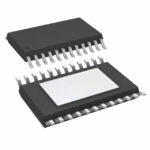 UCC5606PWPTR
The activity of extra discounts on wholesale prices is in full swing…
Please fill in your contact information and we will send you the latest wholesale price list.





