 ChipApex | Global Electronic Components Supplier
SEARCH
Search Product
Search Post
— IC芯片 | 连接器 | 传感器 | 被动器件 —
Search productSearch post
— IC芯片 | 连接器 | 传感器 | 被动器件 —
Consult the customer manager about the wholesale price.
consultation hotline:86-132-6715-2157
email:[email protected]
Contact the product manager for consultation. One-stop consultation is available.
Do you want a lower wholesale price? Please send us your inquiry and we will reply immediately.
The UCC5638FQP is a multimode SCSI active terminator designed for seamless integration into Low Voltage Differential (LVD) SCSI Parallel Interface architectures, including SPI-2, SPI-3, and SPI-4. It automatically detects the bus type via the DIFFB pin and switches termination between Single Ended (SE) and LVD modes. The device operates on a TRMPWR supply voltage ranging from 2.7V to 5.25V within an operating temperature range of 0°C to +70°C. In LVD mode, the typical supply current is 25mA, while SE mode draws up to 10mA. The differential impedance is typically 105Ω with a bias voltage of 125mV.
Verify the specific ordering suffix against the manufacturer's latest documentation to confirm package type and reel specifications. Ensure the procurement channel provides valid traceability and RoHS compliance certificates. Confirm that the component status remains active for long-term production requirements before finalizing orders.
Select this component for applications requiring a monolithic solution for both SE and LVD SCSI termination. Ensure the PCB layout supports the required 120Ω differential impedance standard and manages capacitance balance strictly. Verify that the system power supply can maintain the minimum 2.7V threshold under all load conditions to prevent regulator dropout.
This device belongs to the UCC5638 family of multimode SCSI terminators manufactured by Texas Instruments. It serves as a bridge technology allowing systems to support both legacy Single Ended and newer Low Voltage Differential standards within a single integrated circuit architecture.
Public confirmed substitute part numbers: UCC5638FQPTR, UCC5638FQPTR.A.
When an HVD device is connected, the DIFFSEN line is pulled high above 2.2V. The internal comparators detect this state and switch the terminator to a high-impedance state to prevent interference with the bus.
The DIFFB pin connects to a noise filter capacitor (typically 4.7µF) that conditions the DIFFSEN signal. This filtering ensures stable detection of the bus mode, preventing false switching due to transient noise during mode transitions.
The HS/GND pins are directly connected to the die mount paddle. They conduct heat away from the silicon die to the ground plane on the PCB, reducing junction temperature and improving reliability in the 48-pin LQFP package.
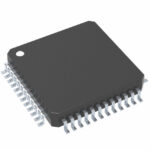 UCC5638FQP
The activity of extra discounts on wholesale prices is in full swing…
Please fill in your contact information and we will send you the latest wholesale price list.





