 ChipApex | Global Electronic Components Supplier
SEARCH
Search Product
Search Post
— IC芯片 | 连接器 | 传感器 | 被动器件 —
Search productSearch post
— IC芯片 | 连接器 | 传感器 | 被动器件 —
Consult the customer manager about the wholesale price.
consultation hotline:86-132-6715-2157
email:[email protected]
Contact the product manager for consultation. One-stop consultation is available.
Do you want a lower wholesale price? Please send us your inquiry and we will reply immediately.
The ULN2003BPWR is a high-voltage, high-current Darlington transistor array manufactured by Texas Instruments. It integrates seven independent Darlington pairs within a single package, each featuring common emitters and integrated suppression diodes for inductive load protection. Designed for low-side switching applications, it accepts TTL, CMOS, PMOS, or DTL compatible inputs to drive loads such as relays, solenoids, and stepper motors. The component utilizes a surface-mount TSSOP-16 package with an exposed pad for thermal management.
Verify the specific suffix 'BPWR' against the official datasheet to confirm the TSSOP-16 package variant and tape-and-reel orientation. Ensure the ordering part number matches the exact manufacturer designation to avoid receiving alternative packages like PDIP or SOIC. Cross-reference the manufacturer's current product status to confirm availability and lifecycle stage before finalizing procurement plans.
Select this component when driving multiple inductive loads requiring up to 500mA per channel from a microcontroller. The integrated flyback diodes eliminate the need for external snubber components, reducing bill of materials cost. Verify that the system voltage does not exceed the maximum collector-emitter rating and that the total power dissipation remains within the thermal limits of the TSSOP-16 package.
This device belongs to the ULN2000 series of high-voltage, high-current Darlington arrays produced by Texas Instruments. The series is engineered for applications demanding significant current gain and voltage handling capabilities. The ULN2003BPWR specifically denotes the surface-mount version, providing a compact solution for space-constrained designs compared to through-hole alternatives while maintaining identical electrical performance characteristics.
Compatible substitutes include the ULN2003AN (PDIP) and ULN2003APW (SOIC). These variants share identical pinouts and electrical specifications but differ in physical package dimensions. Verify mechanical fit and soldering requirements when substituting between through-hole and surface-mount technologies.
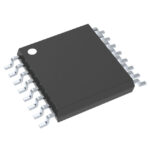 ULN2003BPWR
The activity of extra discounts on wholesale prices is in full swing…
Please fill in your contact information and we will send you the latest wholesale price list.





