ChipApex | Global Electronic Components Supplier
SEARCH
Search Product
Search Post
— IC芯片 | 连接器 | 传感器 | 被动器件 —
Search productSearch post
— IC芯片 | 连接器 | 传感器 | 被动器件 —
Consult the customer manager about the wholesale price.
consultation hotline:86-132-6715-2157
email:[email protected]
Contact the product manager for consultation. One-stop consultation is available.
Do you want a lower wholesale price? Please send us your inquiry and we will reply immediately.
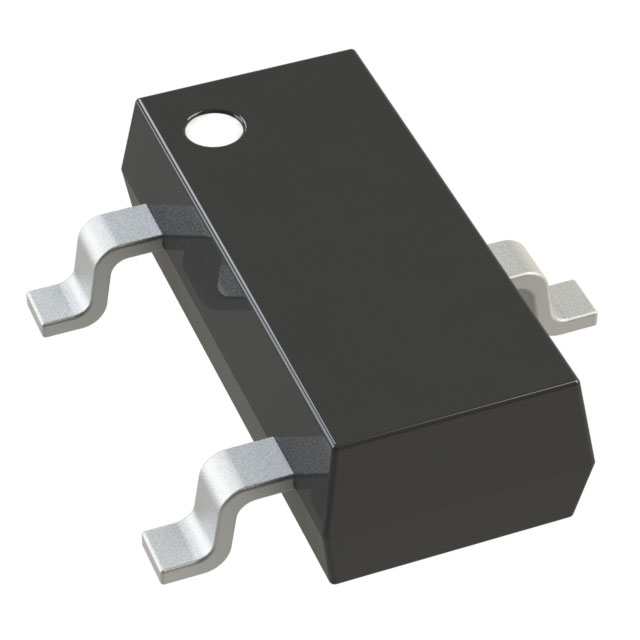
The Panasonic UNR222400L is a silicon NPN epitaxial planar pre-biased transistor designed for digital circuits. It integrates an internal resistor network consisting of R1 (2.2 kΩ) and R2 (10 kΩ). The device features a Mini3-G1 package with a collector-emitter voltage rating of 50 V, a maximum collector current of 500 mA, and a total power dissipation of 200 mW at 25°C. It exhibits a transition frequency of 200 MHz and a DC current gain of 60 at IC = 100 mA.
Verify the specific lifecycle status as the datasheet indicates maintenance or discontinued classifications. Confirm RoHS compliance requirements against EU Directive 2002/95/EC. Ensure the ordering suffix matches the required tape-and-reel packaging format. Validate that the internal resistance values align with the design specifications before finalizing procurement.
Select this component when a compact NPN solution with integrated biasing is required for digital switching. The UNR2224 variant specifically provides a 2.2 kΩ base resistor and a 10 kΩ emitter resistor. Ensure the operating ambient temperature remains within the specified range to maintain the 200 mW power dissipation rating without derating.
This part belongs to the UNR222x series of pre-biased transistors manufactured by Panasonic Industry. The series includes variants with different internal resistor configurations to suit various drive requirements. These components are designed to replace discrete transistor-resistor combinations in space-constrained designs.
Direct substitutes include other UNR2224 equivalents from different manufacturers offering identical 2.2 kΩ and 10 kΩ internal resistance values. Verify pinout compatibility and package dimensions (Mini3-G1/SC-59) to ensure mechanical fit during replacement.
The UNR2224 contains a base resistor (R1) of 2.2 kΩ and an emitter resistor (R2) of 10 kΩ.
The absolute maximum collector current (IC) is rated at 500 mA.
Yes, it has a transition frequency (fT) of 200 MHz, making it suitable for standard digital switching frequencies.
 UNR222400L
The activity of extra discounts on wholesale prices is in full swing…
Please fill in your contact information and we will send you the latest wholesale price list.