ChipApex | Global Electronic Components Supplier
SEARCH
Search Product
Search Post
— IC芯片 | 连接器 | 传感器 | 被动器件 —
Search productSearch post
— IC芯片 | 连接器 | 传感器 | 被动器件 —
Consult the customer manager about the wholesale price.
consultation hotline:86-132-6715-2157
email:[email protected]
Contact the product manager for consultation. One-stop consultation is available.
Do you want a lower wholesale price? Please send us your inquiry and we will reply immediately.
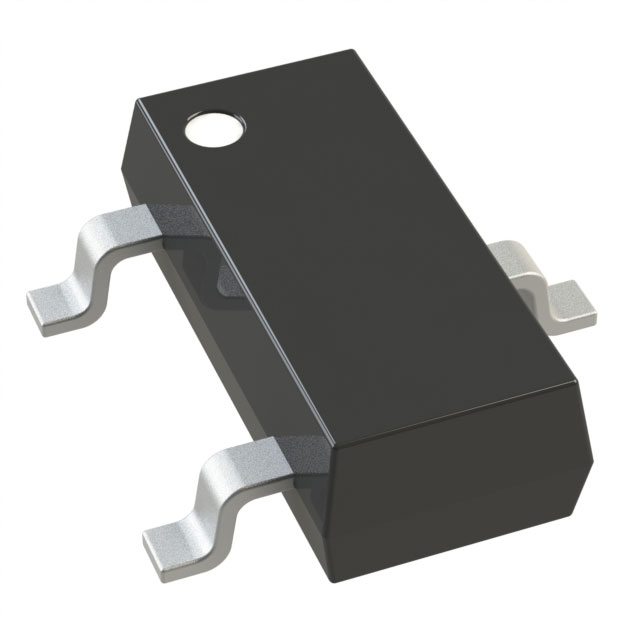
The UNR9211J0L is a Silicon NPN epitaxial planar transistor with built-in bias resistors, designed for digital circuits. It features an SS-Mini3-F1 package (EIAJ SC-89) and operates with a collector-emitter voltage of 50 V and a maximum collector current of 100 mA. The device includes a base resistor (R1) of 10 kΩ and an emitter resistor (R2) of 10 kΩ. Key electrical characteristics include a forward current transfer ratio (hFE) minimum of 35 at IC = 5 mA and VCE = 10 V, a transition frequency (fT) of 150 MHz, and a total power dissipation of 125 mW.
Verify the specific ordering suffix against official Panasonic documentation to confirm internal resistance values and marking symbols. Confirm availability status as product lines may be discontinued or subject to change without notice. Request the latest Product Standards before final design implementation to ensure specifications remain current.
Select this component when a pre-biased NPN transistor with equal base and emitter resistance ratios is required. Ensure the 10 kΩ resistor configuration matches the target logic interface requirements. Verify that the 150 MHz transition frequency meets the signal processing speed needs of the application.
This part belongs to the UNR921xJ series of transistors with built-in resistors manufactured by Panasonic Industry. The series offers various resistor combinations tailored for different digital logic applications. The '0L' suffix typically denotes tape-and-reel packaging, while the 'J' indicates the specific resistor configuration within the family.
Consult the manufacturer's cross-reference list for verified substitutes. Ensure any replacement maintains the same NPN polarity, 50V rating, and identical 10kΩ/10kΩ resistor configuration to guarantee functional compatibility in existing designs.
The UNR9211J contains a base resistor (R1) of 10 kΩ and an emitter resistor (R2) of 10 kΩ.
The transition frequency (fT) is specified as 150 MHz under conditions of VCB = 10 V and IE = -2 mA.
No, the maximum collector-emitter voltage (VCEO) is limited to 50 V, making it suitable for standard low-voltage digital circuits rather than high-voltage applications.
 UNR9211J0L
The activity of extra discounts on wholesale prices is in full swing…
Please fill in your contact information and we will send you the latest wholesale price list.