 ChipApex | Global Electronic Components Supplier
SEARCH
Search Product
Search Post
— IC芯片 | 连接器 | 传感器 | 被动器件 —
Search productSearch post
— IC芯片 | 连接器 | 传感器 | 被动器件 —
Consult the customer manager about the wholesale price.
consultation hotline:86-132-6715-2157
email:[email protected]
Contact the product manager for consultation. One-stop consultation is available.
Do you want a lower wholesale price? Please send us your inquiry and we will reply immediately.
The UPD48288218AFF-E33-DW1-E2 is a high-speed synchronous dynamic random-access memory (SDRAM) module manufactured by Renesas Electronics Corporation. This component belongs to the UPD48288218 series, designed for demanding data processing applications requiring high bandwidth and low latency. It features a specific pin configuration and voltage requirements optimized for system integration. The device supports standard SDRAM protocols, ensuring compatibility with various host controllers. Its construction utilizes advanced semiconductor manufacturing processes to achieve reliable performance under specified operating conditions.
Verify the exact part number suffixes against official Renesas documentation to ensure correct voltage and speed grades. Confirm package type and marking codes match your board design requirements. Check for RoHS compliance status if required by your regional regulations. Ensure supply chain authenticity through authorized distributors only.
Select this component based on its specific speed grade and power consumption characteristics relative to your system's thermal and performance constraints. Compare it with other members of the UPD48288218 family to find the optimal balance between cost and capability. Consider the availability of compatible PCB footprints and signal integrity requirements during the initial design phase.
This part is part of Renesas' broader portfolio of memory solutions, specifically targeting the synchronous DRAM segment. It complements other components in embedded and server-class architectures. The UPD48288218 series represents a generation of memory devices focused on improving data throughput while maintaining power efficiency standards set by industry norms for that era of technology.
Consult official cross-reference guides or Renesas technical support for verified substitute part numbers. Ensure any replacement matches the original electrical specifications, pinout, and timing parameters exactly. Generic equivalents may not guarantee functional compatibility without rigorous validation.
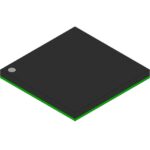 UPD48288218AFF-E33-DW1-E2
The activity of extra discounts on wholesale prices is in full swing…
Please fill in your contact information and we will send you the latest wholesale price list.





