 ChipApex | Global Electronic Components Supplier
SEARCH
Search Product
Search Post
— IC芯片 | 连接器 | 传感器 | 被动器件 —
Search productSearch post
— IC芯片 | 连接器 | 传感器 | 被动器件 —
Consult the customer manager about the wholesale price.
consultation hotline:86-132-6715-2157
email:[email protected]
Contact the product manager for consultation. One-stop consultation is available.
Do you want a lower wholesale price? Please send us your inquiry and we will reply immediately.
The VOT8025AD-V is a phototriac output optocoupler manufactured by Vishay Semiconductor Opto Division. It integrates a Gallium Arsenide infrared LED optically coupled to a photosensitive zero-crossing TRIAC. The device features high dV/dt capability and low input current requirements, designed for reliable isolation in AC switching applications. It is housed in a 6-DIP package with 5 leads, providing a body width of 7.62 mm. Key electrical ratings include an 800 V repetitive peak off-state voltage (Vdrm) and a 100 mA on-state current (IT). The unit offers 5300 Vrms isolation voltage between input and output channels.
Verify the specific suffix 'V' indicates tape and reel packaging if bulk procurement is required. Confirm the manufacturer designation matches Vishay Semiconductor Opto Division documentation. Ensure the DIP-5 lead configuration aligns with PCB footprint specifications. Cross-reference the 5300 Vrms isolation rating against system safety standards. Validate the 800 Vdrm rating meets circuit voltage requirements.
Select this component when zero-crossing switching is mandatory to minimize noise. The high dV/dt characteristic suits environments with significant electrical noise. The 5300 Vrms isolation supports high-voltage separation needs. Consider the 6-DIP package size for through-hole assembly constraints. Evaluate the low input current benefit for battery-powered or low-power logic sources.
This device belongs to the VOT8025A family, which includes variants like VOT8025AB and VOT8025AG. These components share the same core architecture of a GaAs IR LED coupled to a photosensitive TRIAC. The family is designed for general-purpose AC switching with integrated zero-crossing detection. Packaging options vary, including DIP configurations for through-hole mounting.
The zero-crossing feature ensures the TRIAC turns on only when the AC voltage waveform crosses zero volts, reducing electromagnetic interference and inrush current.
It incorporates design elements to provide high dV/dt immunity, preventing unintended triggering caused by rapid voltage changes across the output terminals.
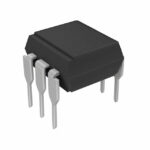 VOT8025AD
The activity of extra discounts on wholesale prices is in full swing…
Please fill in your contact information and we will send you the latest wholesale price list.






