 ChipApex | Global Electronic Components Supplier
SEARCH
Search Product
Search Post
— IC芯片 | 连接器 | 传感器 | 被动器件 —
Search productSearch post
— IC芯片 | 连接器 | 传感器 | 被动器件 —
Consult the customer manager about the wholesale price.
consultation hotline:86-132-6715-2157
email:[email protected]
Contact the product manager for consultation. One-stop consultation is available.
Do you want a lower wholesale price? Please send us your inquiry and we will reply immediately.
The XC17S150XLPD8C is a specialty memory circuit manufactured by Xilinx, now part of AMD. It is housed in an 8-pin PDIP package and functions as a non-volatile configuration memory device. The component features a memory density of 150 kilobits with a memory width of 1 bit. It supports a maximum clock frequency (fCLK) of 10 MHz. The device is classified under the JESD-609 code e0 and carries an EAR99 ECCN code. It is designed for use in systems requiring reliable storage of configuration data for programmable logic devices.
Verify the manufacturer designation carefully, as this component was originally produced by Xilinx before its acquisition by AMD. Ensure the specific suffix D8C matches the required package and temperature grade for your design. Confirm RoHS compliance status if environmental regulations apply to your project, as older variants may not meet current standards. Cross-reference the datasheet revision to ensure compatibility with your target FPGA family.
Select this component when a small-capacity, single-bit wide configuration memory is required for Xilinx Spartan or Virtex devices. Consider the 10 MHz clock speed limitation against your system's programming requirements. Evaluate the PDIP8 package constraints regarding PCB space and assembly method. Compare against newer generation PROMs if higher density or faster programming speeds are needed for future scalability.
This part belongs to the Xilinx PROM family, specifically designed to store the bitstream or configuration data for Xilinx Field Programmable Gate Arrays (FPGAs). These devices are critical for booting programmable logic chips, ensuring they load the correct operational state upon power-up. The XC17 series represents a legacy line of configuration memories widely used in established industrial and communication equipment designs.
Check for direct pin-compatible substitutes within the XC17Sxx series with different densities. Verify if newer AMD/Xilinx configuration memories offer backward compatibility. Ensure any replacement maintains the same voltage levels and interface timing characteristics.
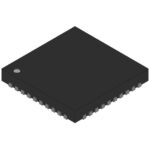 XC17S150XLPD8C
The activity of extra discounts on wholesale prices is in full swing…
Please fill in your contact information and we will send you the latest wholesale price list.




