 ChipApex | Global Electronic Components Supplier
SEARCH
Search Product
Search Post
— IC芯片 | 连接器 | 传感器 | 被动器件 —
Search productSearch post
— IC芯片 | 连接器 | 传感器 | 被动器件 —
Consult the customer manager about the wholesale price.
consultation hotline:86-132-6715-2157
email:[email protected]
Contact the product manager for consultation. One-stop consultation is available.
Do you want a lower wholesale price? Please send us your inquiry and we will reply immediately.
The XC9401A605MR-G is an off-line controller IC designed for LED lighting applications. It utilizes a flyback and step-down (buck) topology to drive LEDs with a maximum output current of 360 mA. The device supports PWM dimming and operates within an input voltage range of 9 VDC to 240 VAC. It features a low power supply current of 300 uA and dissipates up to 250 mW. The component is housed in a SOT-26-6 package and functions across a temperature range of -40°C to +85°C.
Verify the obsolete status of this component before integration, as it may no longer be in active production. Confirm that the SOT-26-6 package matches your PCB footprint requirements. Ensure the input voltage specifications align with your target AC/DC source. Check for RoHS compliance documentation if required by your manufacturing standards. Validate thermal dissipation capabilities against your system's power budget.
Select this IC for applications requiring integrated flyback and buck control in a compact form factor. Consider the 360 mA output limit when designing for higher power LED arrays. The wide input voltage range allows flexibility in global AC mains compatibility. Evaluate the SOT-26-6 package size constraints against available board space. Ensure the operating temperature range meets the environmental conditions of the final assembly.
This component belongs to the XC9401 series from Torex Semiconductor, which specializes in CMOS analog technology including LDO regulators and DC/DC converters. The XC9401 series targets efficient power management for LED lighting. This specific variant integrates both flyback and buck functionalities, distinguishing it from simpler single-topology controllers in the broader product line.
Public confirmed substitute part numbers are not provided in the available documentation. The XC9401B605MR-G exhibits identical performance profiles according to database comparisons, suggesting functional equivalence. Verify pinout and electrical parameters against any potential alternative sources before adoption.
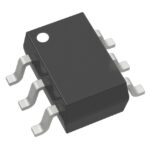 XC9401A605MR-G
The activity of extra discounts on wholesale prices is in full swing…
Please fill in your contact information and we will send you the latest wholesale price list.





