 ChipApex | Global Electronic Components Supplier
SEARCH
Search Product
Search Post
— IC芯片 | 连接器 | 传感器 | 被动器件 —
Search productSearch post
— IC芯片 | 连接器 | 传感器 | 被动器件 —
Consult the customer manager about the wholesale price.
consultation hotline:86-132-6715-2157
email:[email protected]
Contact the product manager for consultation. One-stop consultation is available.
Do you want a lower wholesale price? Please send us your inquiry and we will reply immediately.
The XC9502B092AR-G is a dual-channel step-up/step-down DC/DC controller IC manufactured by Torex Semiconductor Ltd. It integrates two independent control loops capable of operating in buck, boost, or buck-boost modes within a single package. The device supports input voltage ranges typical for battery-powered applications and provides precise output regulation through external feedback networks. Designed for energy efficiency, it features low quiescent current consumption to extend battery life in portable electronics. The controller utilizes a fixed switching frequency architecture to simplify external component selection and EMI management.
Verify the specific suffix 'G' indicates RoHS compliance status as per manufacturer documentation. Confirm the package type matches your PCB footprint requirements. Ensure the ordering code corresponds exactly to the dual-channel variant. Check for any specific tape and reel specifications if automated assembly is planned. Validate that the revision level meets your production timeline needs.
Select this component when dual isolated or related power rails are required from a single controller unit. Consider its efficiency characteristics against thermal constraints in enclosed designs. Evaluate the external inductor and capacitor requirements against available board space. Compare performance metrics with single-channel alternatives if only one rail is strictly necessary.
This part belongs to the XC9502 series of dual-channel DC/DC controllers from Torex Semiconductor. The series is designed for high-efficiency power management in compact form factors. It complements other Torex regulators by offering multi-rail solutions without requiring multiple separate controller ICs, thereby reducing bill of materials complexity.
Direct substitutes may include other dual-channel buck-boost controllers from Torex such as the XC9501 series, though pin compatibility must be verified. Single-channel equivalents like the XC9201 series require two units and different layout strategies. Cross-manufacturer replacements require careful evaluation of control loop stability and switching frequency alignment.
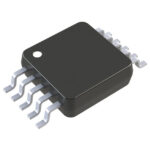 XC9502B092AR-G
The activity of extra discounts on wholesale prices is in full swing…
Please fill in your contact information and we will send you the latest wholesale price list.




