 ChipApex | Global Electronic Components Supplier
SEARCH
Search Product
Search Post
— IC芯片 | 连接器 | 传感器 | 被动器件 —
Search productSearch post
— IC芯片 | 连接器 | 传感器 | 被动器件 —
Consult the customer manager about the wholesale price.
consultation hotline:86-132-6715-2157
email:[email protected]
Contact the product manager for consultation. One-stop consultation is available.
Do you want a lower wholesale price? Please send us your inquiry and we will reply immediately.
The AMD XCZU67DR-L2FFVE1156I is a Zynq UltraScale+ RFSoC System on Chip manufactured by AMD. It integrates a Processing System with quad-core ARM Cortex-A53 and dual-core ARM Cortex-R5 processors, alongside a Programmable Logic fabric and integrated RF data converters. The device utilizes a 1156-pin FCBGA package measuring 35x35 mm. It operates within an industrial temperature range of -40°C to +100°C (TJ). This component supports high-speed interfaces including PCIe Gen3/Gen4 and JESD204B/C, designed for complex signal processing applications requiring direct RF sampling capabilities.
Verify the specific suffix 'L' in the part number against official AMD documentation to confirm if it denotes a low-power variant or specific binning, as standard datasheets may not explicitly detail suffix variations. Confirm RoHS3 compliance status directly with the manufacturer or authorized distributors. Ensure export control classifications are reviewed prior to procurement due to potential restrictions on high-performance semiconductor components.
Select this model when application requirements demand integrated RF direct sampling combined with substantial FPGA programmable logic resources. Compare the XCZU67DR against other RFSoC variants based on the required number of RF channels, DSP slice count, and available Block RAM. Ensure the 1156-pin footprint and thermal management solutions align with the target PCB design constraints.
This component belongs to the Zynq UltraScale+ RFSoC family, which merges the processing power of Zynq MPSoCs with high-speed analog-to-digital and digital-to-analog conversion. The 'XCZU67DR' designation indicates a specific capacity within the series, offering a balance between logic density and RF performance for demanding wireless infrastructure applications.
Direct pin-to-pin replacements within the same package should be sought from the Zynq UltraScale+ RFSoC lineup, such as the XCZU69DR or XCZU7EV series, provided they meet the speed grade and I/O requirements. Verify software compatibility and resource utilization before substituting with lower or higher capacity devices.
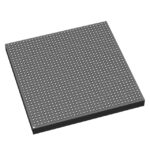 XCZU67DR-L2FFVE1156I
The activity of extra discounts on wholesale prices is in full swing…
Please fill in your contact information and we will send you the latest wholesale price list.




