 ChipApex | Global Electronic Components Supplier
SEARCH
Search Product
Search Post
— IC芯片 | 连接器 | 传感器 | 被动器件 —
Search productSearch post
— IC芯片 | 连接器 | 传感器 | 被动器件 —
Consult the customer manager about the wholesale price.
consultation hotline:86-132-6715-2157
email:[email protected]
Contact the product manager for consultation. One-stop consultation is available.
Do you want a lower wholesale price? Please send us your inquiry and we will reply immediately.
The AMD XCZU9EG-1FFVC900E is a System on Chip (SoC) FPGA from the Zynq UltraScale+ MPSOC EG series. It integrates a quad-core ARM Cortex-A53 MPCore with CoreSight, dual ARM Cortex-R5 processors with CoreSight, and an ARM Mali-400 MP2 GPU. The programmable logic section contains over 599K logic cells. Key electrical parameters include maximum clock frequencies of 500 MHz for the A53 cores, 600 MHz for the R5 cores, and 1.2 GHz for the FPGA fabric. The device operates at a core voltage of 850 mV within a temperature range of 0°C to 100°C TJ.
Verify component authenticity through authorized AMD distributors or certified partners. Confirm the specific suffix 'E' denotes the extended commercial temperature range (0°C to 100°C TJ). Ensure compliance with RoHS directives and check for moisture sensitivity labeling prior to soldering. Lead times and availability should be confirmed directly with suppliers as they fluctuate based on production schedules.
Select this model when a balance of processing power and programmability is required for commercial-grade applications. The XCZU9EG variant offers higher performance than standard CG parts but may have different thermal or pinout characteristics compared to larger packages like FFVB1156. Evaluate if the 599K ALM count and 204 I/O pins meet the specific interface requirements of the target design.
This component belongs to the Zynq UltraScale+ MPSOC family, which merges ARM processor subsystems with Xilinx FPGA technology. The 'EG' suffix typically indicates enhanced performance or specific feature sets within the XCZU9CG/EG product line. It serves as a central processing unit for complex embedded systems requiring both deterministic hardware logic and general-purpose computing.
Direct functional replacements within the same package are limited due to unique pinouts. Consider the XCZU9CG-1FFVC900I for similar logic density but verify differences in processor configurations and temperature ratings. Larger packages such as XCZU9EG-L1FFVB1156I offer more I/O but require significant board redesign.
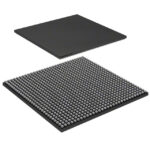 XCZU9EG-1FFVC900E
The activity of extra discounts on wholesale prices is in full swing…
Please fill in your contact information and we will send you the latest wholesale price list.




